
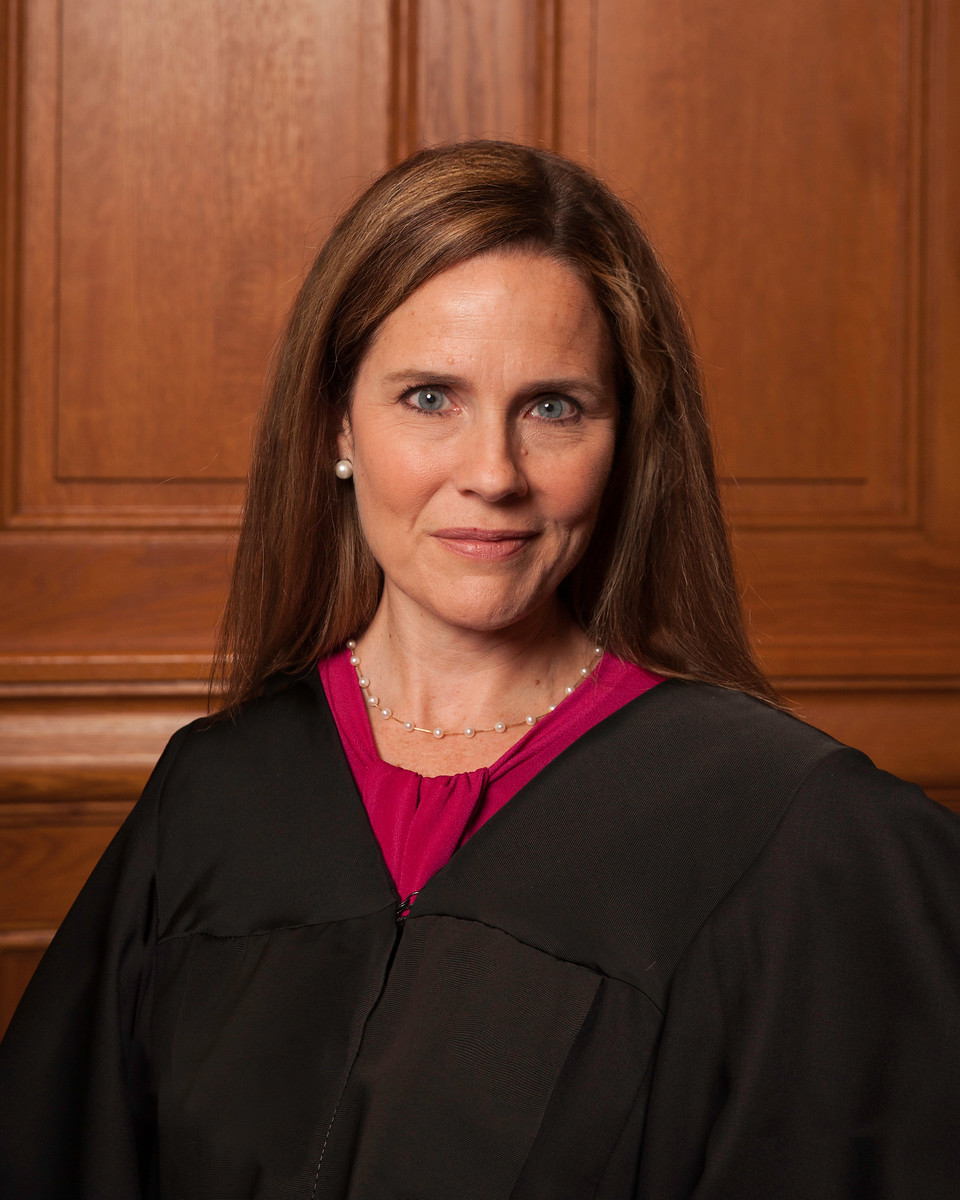
Supreme Court Justice Amy Coney Barrett is offering her most personal defense yet of the decision that ended nearly 50 years of federal protection for abortion rights. In a new memoir, Listening to the Law, Barrett describes the 2022 ruling overturning Roe v. Wade as a move that “respected the choice” of the American people—a phrase sure to ignite as much debate as the opinion itself.
According to CNN, which obtained an advance copy, Barrett was paid $2 million for the book, set to be published on September 9. The memoir avoids any behind-the-scenes revelations about how cases were decided, but Barrett does not shy away from articulating her broader philosophy. “The court’s role is to respect the choices that the people have agreed upon, not to tell them what they should agree to,” she writes, framing the majority opinion in Dobbs v. Jackson Women’s Health Organization as a correction to what she views as judicial overreach in 1973.
That reasoning, however, runs headlong into public opinion. In May of this year, more than 60 percent of Americans told pollsters they believed abortion should be legal in all or most cases, virtually unchanged from a year before the court dismantled Roe. Since then, 19 states have either banned abortion outright or passed laws restricting access far more tightly than Roe’s viability standard once allowed. In practice, the decision Barrett calls a “respect” for choice has meant less choice for millions of women, depending on where they live.
Barrett’s memoir places her at the center of one of the most consequential shifts in modern constitutional law. Her path to the court was itself deeply controversial: nominated by Donald Trump just days after the death of Ruth Bader Ginsburg, confirmed by Mitch McConnell’s Senate majority with less than two months left before the 2020 election, and celebrated by conservatives as the vote that would finally tip the scales against Roe. Her arrival cemented a 6–3 conservative majority that has consistently ruled in Trump’s favor during his second term, including expanding presidential authority.
In the book, Barrett speaks of champagne celebrations after difficult opinions, brushes aside dissenting voices from Justices Elena Kagan, Sonia Sotomayor, and Stephen Breyer, and describes abortion as uniquely fraught compared to rights like contraception or marriage. That distinction, she argues, justified leaving the matter to the states.
She refers to Trump “only in passing,” instead portraying the court as an institution always shaped by its times. “The challenges themselves will never disappear,” she writes. “Throughout, the job of every justice is to do his or her best by the law.”
Whether Americans see the Dobbs decision as fidelity to law or a rupture of it remains unresolved. But Barrett, with her memoir, is making clear where she stands.



