
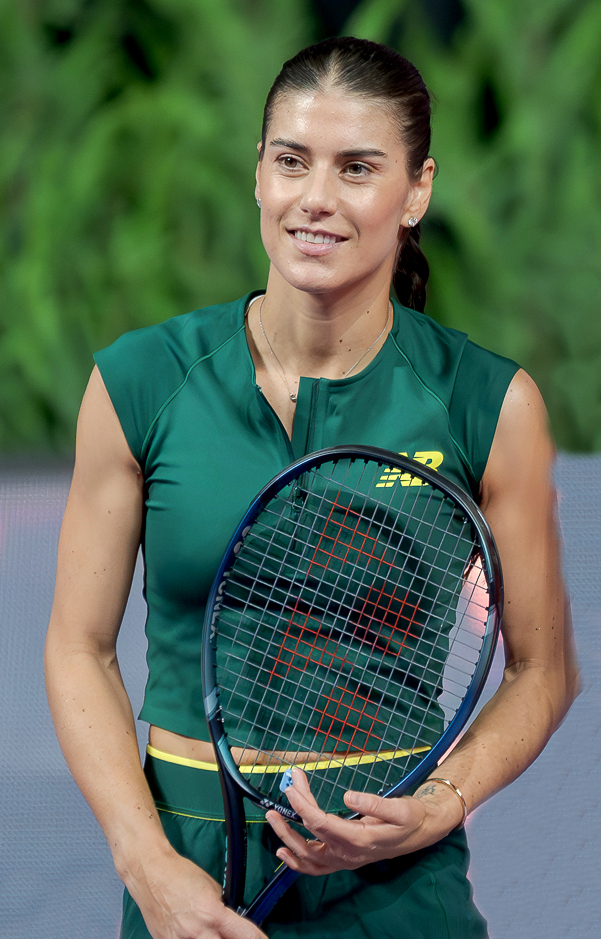
Romanian tennis veteran Sorana Cîrstea says the trophy she won just days before the U.S. Open was stolen from her hotel room in Manhattan.
Cîrstea, 35, captured the Tennis in the Land title in Cleveland on August 23, defeating American Ann Li in the final. The victory marked only the third singles title of her 17-year career on the WTA Tour, a reminder of her persistence on the circuit and her ability to still win big matches well into her 30s. She arrived in New York the same day to prepare for the Open, but by the end of her stay, the trophy was gone.
On August 30, Cîrstea posted an emotional note on Instagram, pleading for the return of the prize. “Whoever stole my Cleveland trophy from room [redacted] at The Fifty Sonesta please give it back! It has NO material value, just sentimental value. It would be grately [sic] appreciated!” she wrote. She reposted the message again on September 1, adding that tournament organizers were working on a replacement.
The Fifty Sonesta, where Cîrstea was staying during the U.S. Open, declined to comment. A spokesperson for the New York Police Department said there were no official complaint reports on file regarding the alleged theft.
For Cîrstea, the loss is not about dollars but memory. “It has no material value, just sentimental value,” she emphasized, reminding followers that for an athlete, trophies represent the hard-won moments that define a career. Her Cleveland win was her first title since 2021 and just the third of her career, following an earlier triumph in 2008 when she was still a teenager.
Her U.S. Open campaign that followed was less successful. Cîrstea won her first-round singles match before falling in the second round to Karolina Muchova, last year’s semifinalist. In doubles, she and partner Anna Kalinskaya were eliminated in the first round. Still, her Cleveland title was a bright spot — one she now hopes won’t be overshadowed by the loss of the trophy.
The episode also underscores the sometimes surreal realities of life on tour. Players shuttle between cities, competing in front of thousands one night and sleeping in hotels the next, their keepsakes and reminders of victory packed in bags as they move from match to match. For Cîrstea, that rhythm of travel meant her Cleveland trophy was little more than a piece of luggage in her New York hotel room — until it wasn’t.
Whether the hardware is recovered or replaced, Cîrstea’s plea highlights what trophies often mean to players: not the metal and wood themselves, but the journey they represent.



