
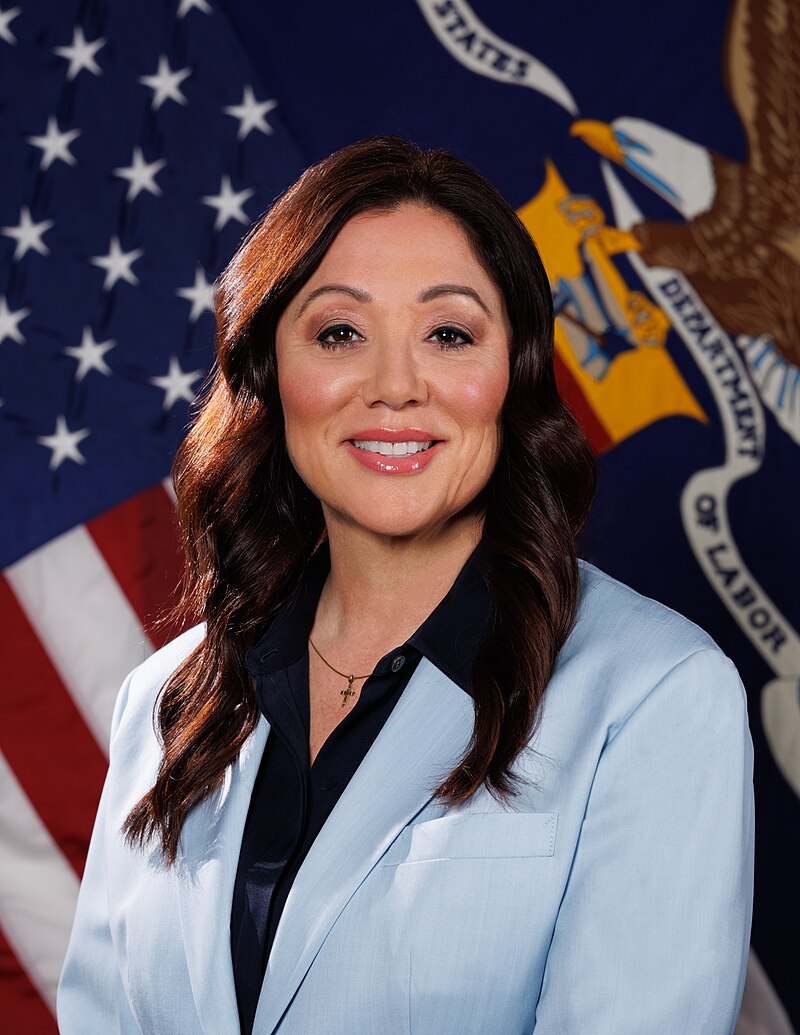
U.S. Labor Secretary Lori Chavez-DeRemer capped off a four-state swing last week, part of what she’s calling the “America at Work” listening tour. The trip took her through Idaho, Utah, Wisconsin, and Wyoming, where she spent time with miners, manufacturers, builders, and business leaders—all with the aim of spotlighting the Trump Administration’s push to expand workforce training and connect Americans to what she calls “good-paying, in-demand jobs.”
For Chavez-DeRemer, the tour has become a kind of traveling roadshow for President Trump’s economic agenda. “In just 200 days, President Trump has jumpstarted the American economy and ushered in a new Golden Age of prosperity by putting workers, families, and job creators back at the center of our economic agenda,” she said. “That momentum is clear everywhere I go.”
In Wisconsin, the secretary’s first stop was Husco International in Waukesha, a manufacturer specializing in high-performance hydraulic components. There, she toured engineering labs and production lines, even chatting with interns who, she said, represent the next generation of high-wage talent. Later, she visited a construction site in Mequon alongside Associated Builders and Contractors, using the stop to tout Pell Grant expansions under the One Big, Beautiful Bill Act—a central Trump policy she argues will widen access to skills training.
The emphasis on apprenticeships carried over into Idaho. At Micron Technology in Boise, Chavez-DeRemer celebrated the graduation of five new journeymen and welcomed 23 apprentices. She tied the moment to Trump’s pledge of reaching one million active apprenticeships nationwide, while also pointing to Micron’s role in U.S. semiconductor manufacturing and what she framed as “American AI dominance.” From there, she visited Cascade to meet with Perpetua Resources about the Stibnite Gold Project, which is pitched as both a jobs program and a strategic boost to domestic mineral supply chains.
In Wyoming, Chavez-DeRemer joined coal miners underground, pledging to support safety and training while underscoring the role of fossil fuels in local economies. She closed the tour in Utah, joining Rep. Celeste Maloy for a business roundtable in Salt Lake City before touring Hexcel Corp., an advanced composites manufacturer serving the aerospace and defense industries.
Her tour comes at a moment of political tension. On Labor Day, protests across the country framed Trump’s economic program as favoring corporations over workers. Demonstrators rallied under the banner of “Workers Over Billionaires,” accusing the administration of weakening unions while cutting taxes for business interests. Chavez-DeRemer, however, brushed off those critiques.
“My goal when I became Labor Secretary is to bring business and labor together,” she said, noting that she spent the holiday riding in a union parade in Erie, Pennsylvania. “I talked to the Teamsters, I talked to a lifelong Democrat who told me he voted for President Trump twice because those policies matter to his membership. It equates to jobs—and that’s what matters.”
She also leaned on economic indicators the administration says prove its case: steady unemployment, 1.4 percent wage growth in blue-collar sectors, and rising consumer confidence. “The American worker is keeping more of their hard-earned dollars,” she said. “They tell me that story, and I’ve now been in 32 different states hearing it directly.”
For Chavez-DeRemer, the message is clear. Apprenticeships, Pell Grants, and investments in local training programs are meant to signal that the administration is backing workers on the ground, not just corporations in boardrooms. Whether that message resonates more broadly will become clearer as she continues her tour into the fall.



