
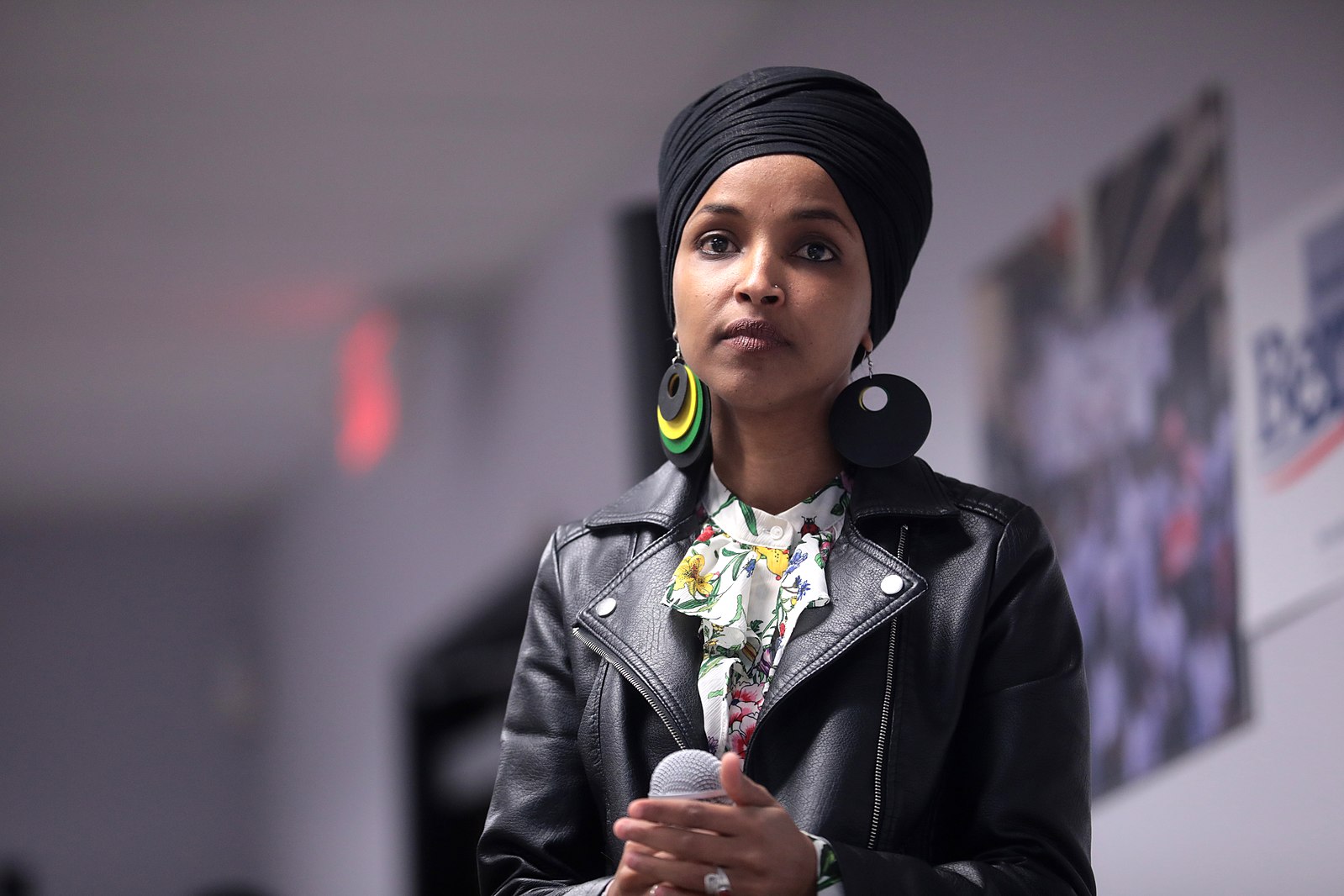
In the days after a mass shooting at a Minneapolis Catholic school that left two children dead and more than a dozen others wounded, the grief of a shaken community has been matched by fierce arguments over who should be held accountable for preventing such tragedies. The debate came to national television on Sunday, when Representative Ilhan Omar, a Minnesota Democrat, pushed back against Sebastian Gorka, a senior Trump administration official, over the federal government’s role in stopping mass violence.
Gorka, appearing first on CNN’s State of the Union, framed the issue as one of local responsibility. “Problems should be solved at the point closest to the people affected by that problem,” he told host Brianna Keilar, dismissing concerns about federal budget cuts that had reduced Minnesota’s ability to track threats of violence. When pressed about an $18.5 million cut to Department of Homeland Security grants that once funded prevention programs through the Minnesota Department of Public Safety, Gorka called the connection “laughable,” blaming the community itself for missing warning signs. “Why wasn’t somebody in the community helping him because they didn’t get a grant from DHS? That’s risible,” he said.
The suspect in the shooting, identified as 32-year-old Robin Westman, entered the Annunciation Catholic School with three legally purchased firearms and opened fire during the first Mass of the school year, firing more than a hundred rounds through stained glass windows. Two children, ages 8 and 10, were killed. Seventeen others, most of them children, were injured. Westman died of a self-inflicted gunshot wound before police stormed the church. FBI Director Kash Patel confirmed the agency is investigating the attack as both a terrorist act and a hate crime.
Omar, who appeared on the program after Gorka, said it was “unfortunate” that people like him are guiding policy discussions in the wake of mass violence. “At one moment he talks about the evil, murderous person who took two angels from us, and then he wants to distract by mentioning their transgender identity. At another moment he acknowledges the need for mental health support and community threat assessments, but when you point out that DHS took those resources away, he says it’s not their responsibility. It’s all over the place because the goal is to deflect from reality,” she said.
Minnesota’s Department of Public Safety Commissioner Bob Jacobson had warned members of the state’s congressional delegation in July that losing DHS funding would weaken their ability to assess threats of targeted violence at schools, religious institutions, and political events. “Given recent events in Minnesota…this funding cut will further jeopardize the safety of Minnesotans,” Jacobson wrote.
For Omar, the answer lies not only in restoring those resources but also in reducing access to the kinds of weapons that make these attacks so deadly. “We need to get rid of assault weapons in our communities,” she said, while emphasizing that early intervention and mental health care remain critical. “When somebody is exhibiting signs there could be a problem, we have to talk to them, get them help, and yes, alert law enforcement. But this is not the moment to point fingers—it’s the moment to come together so there are no more dead angels in our communities.”
Senator Amy Klobuchar, also a Minnesota Democrat, captured the frustration of many in her state. “If a bunch of kids praying in church and shot down through the windows of that church isn’t enough to make people move, I just don’t know what is anymore,” she said.



