
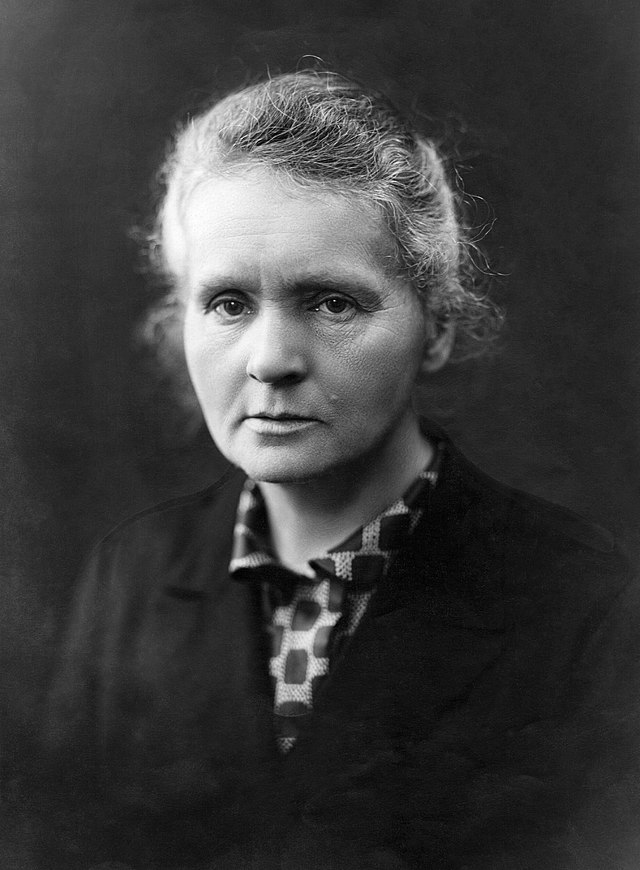
Marie Curie’s name has long been shorthand for genius, perseverance, and discovery. She was not only the first woman to win a Nobel Prize but her work in radioactivity did more than shift the trajectory of modern science—it reshaped the very possibilities of medicine, war, and how the world thought about women in science.
Born Maria Skłodowska in Warsaw in November of 1867, Curie grew up in a household that treasured education even when money was scarce. Mathematics and physics came to her with an ease that belied the enormous social and financial obstacles she faced as a young woman in Poland at the time.
In 1891, Curie moved to Paris, enrolling at the Sorbonne where she earned degrees in both physics and mathematics, often studying by candlelight and living on the edge of poverty. It was there that she met Pierre Curie, her intellectual partner and soon her husband. Together they embarked on the work that would define their lives: the discovery, in 1898, of two new elements—polonium and radium. Marie coined the term “radioactivity” to describe the strange, invisible forces these elements emitted, opening a door that science had not even known existed.
Recognition followed quickly. In 1903, Marie and Pierre, alongside Henri Becquerel, received the Nobel Prize in Physics. The award marked a historic moment: for the first time, a woman’s name was inscribed in the Nobel record. Yet the celebration was short-lived. Just three years later, Pierre died suddenly in a street accident, leaving Marie a widow with two young daughters. By 1911, her determination yielded another milestone—her second Nobel Prize, this time in Chemistry, for her continued work isolating and studying radium and polonium.
Her discoveries had far-reaching consequences, especially in medicine. The use of radium in cancer treatment revolutionized approaches to what had long been considered a death sentence. And during World War I, she personally organized mobile X-ray units—nicknamed “Little Curies”—that traveled to the front lines. She trained nurses to use them, saving countless soldiers who might otherwise have died from shrapnel wounds and internal injuries.
in 1995, she became the first woman laid to rest in the Panthéon in Paris for her own achievements—an acknowledgment of a life lived not in the shadows but in the full glare of history.
Marie Curie’s life remains a lesson in the power of persistence and imagination. Her discoveries changed science. Her presence changed expectations. She was a woman who, against all odds, redefined what was possible.



