
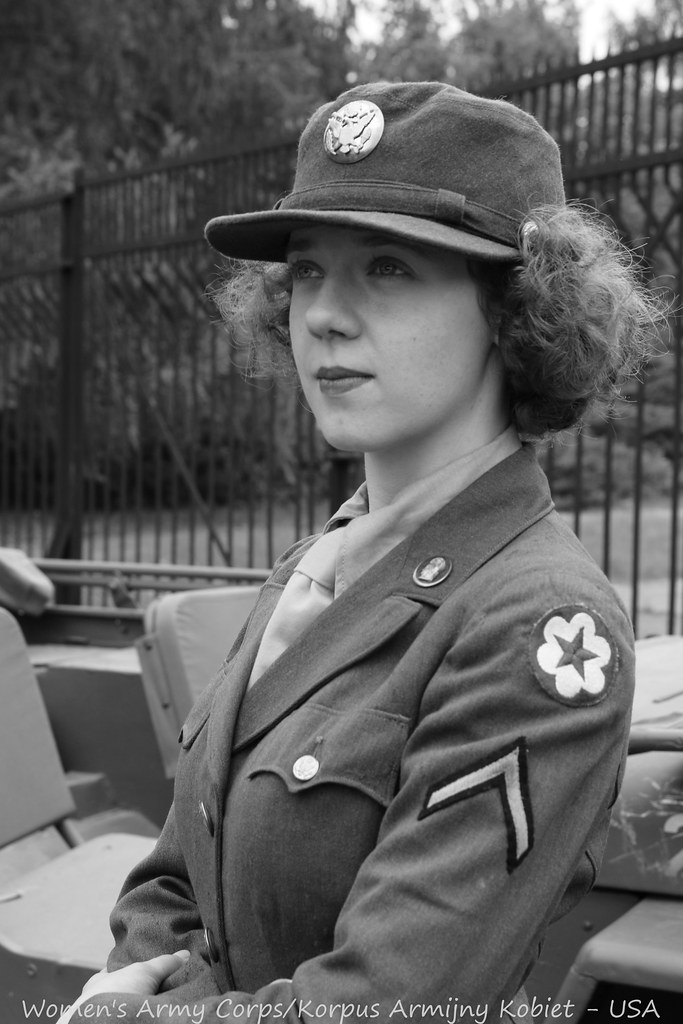
When the United States entered World War II, it needed more than just soldiers on the front lines. It needed people to handle the endless logistics, the typing, the radio calls, the repairs, the communications. Basically everything aside from storming the front lines. That’s where the Women’s Army Corps came in. What began as an auxiliary unit quickly transformed into one of the most important steps forward for women in uniform—and, more broadly, for gender equality in America.
Congress established the Women’s Army Auxiliary Corps (WAAC) in May 1942, making it the first time women could serve with the U.S. Army. “Auxiliary” is the key word here: the women didn’t have the same benefits, pay, or recognition as male soldiers even thought they wore uniforms, and worked in Army facilities. In 1943, it dropped the “Auxiliary” and became the Women’s Army Corps (WAC), giving members full military status. That meant equal pay, equal rights to promotion, and a long-overdue acknowledgment that women were not just “helping out,” but serving.
The women of the WAC filled jobs that kept the military running. They were clerks, typists, and administrators, but they were also radio operators, drivers, and mechanics—roles that had been almost exclusively male before the war. Every WAC member doing that work meant one more man available for combat. And in a war that stretched across the globe, freeing up manpower wasn’t just helpful—it was essential.
The Corps was led by Oveta Culp Hobby, who had a lawyer’s training and a politician’s knack for navigating institutions that weren’t designed to let women in. Hobby built the WAC into a force that numbered more than 100,000 at its peak, sending women not just across the U.S. but overseas, from Europe to Asia, wherever the Army needed them.
Of course, the women who joined faced discrimination from every angle. Some male soldiers saw them as intruders. Newspapers mocked them. Rumors spread about their morality. But over time, the professionalism and discipline of the WAC wore those prejudices down. They proved themselves over and over, showing that women could not only do the work but thrive in it.
The story is more complicated for the Black women who served. They faced the double burden of racism and sexism, confined to segregated units, denied opportunities given to white women. Still, they pressed forward. Their service, alongside Black men in uniform, added pressure that led to President Truman’s 1948 order to desegregate the armed forces. That milestone, like so many others, was paved in part by the persistence of WAC members.
The Corps didn’t disappear after World War II. WAC soldiers served in Korea and Vietnam, continuing to expand the idea of what women in uniform could do. By the time the WAC was formally disbanded in 1978, its mission was complete: women had been integrated into the regular Army. What once had been seen as an experiment had become ordinary—women working alongside men as a matter of course.
The story of the WAC is a reminder that progress often comes in the middle of crisis—and that sometimes the simple act of showing up and doing the work is enough to rewrite history.



