
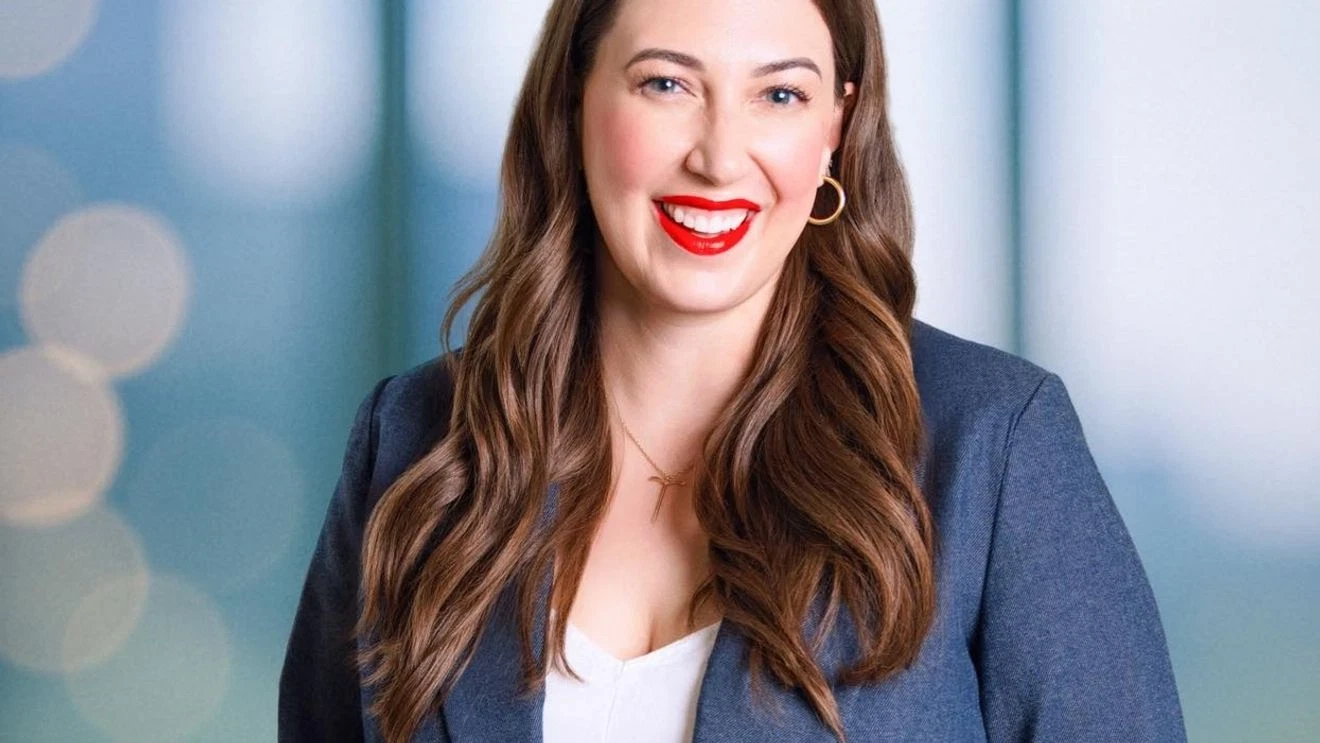
Catelin Drey, a 37-year-old marketing executive and first-time candidate, pulled off a political upset this week in northwest Iowa, defeating Christopher Prosch, an avowed MAGA conservative, in a special election for the state senate. The win marks the second time this year that Democrats have flipped a Republican-held seat in Iowa, suggesting that voters—even in Trump-friendly territory—may be ready to shift course.
The contest was held to fill the seat of the late Rocky De Witt, a Republican senator whose death left an opening in Iowa’s District 1, which covers much of Sioux City. On Tuesday, Drey secured 55 percent of the vote to Prosch’s 44 percent, a swing of more than 20 points compared with Donald Trump’s performance in the district just last year.
Drey framed her victory as proof that working families in Iowa are no longer buying what Republicans have been selling. “We delivered a message that resonates with voters,” she said the day after the election. “People right now are frustrated with the way things are going. Iowa’s economy is last in the country, we’re last for maternal healthcare providers per capita, and people are ready for a change.”
Her opponent, Prosch, leaned heavily on Trump-style politics, echoing conspiracy theories about the 2020 election and casting doubt on climate change. At one point, he even compared abortion access to the Holocaust—a remark that critics said put him far outside the mainstream. Drey, by contrast, leaned into her record as the founder of the grassroots group Moms for Iowa and pitched herself as a practical progressive who would fight for families on issues like health care, wages, and education.
For Democrats, the win is more than symbolic. It cuts into what had been a Republican supermajority in the state senate, changing the balance to 33 Republicans and 17 Democrats. That shift, while still leaving the GOP in control, now gives Democrats leverage to block Governor Kim Reynolds’s appointments to boards, commissions, and agencies.
National Democrats also see an opening. Drey’s race attracted significant investment from the Democratic Legislative Campaign Committee and the Democratic National Committee, which deployed thousands of volunteers for phone banking and voter outreach. Heather Williams, president of the DLCC, said the victory was part of a broader trend: “As Trump and Republicans wreck the economy and erode democracy with power-grabbing schemes, Democrats’ special election wins should send a flashing warning to the GOP: voters are rejecting the failing MAGA agenda and leaving Republican candidates in the dust.”
Republicans, however, dismissed the results. Jeff Kaufmann, chair of the Iowa Republican Party, derided the Democratic investment in the race as a sign of desperation. “National Democrats were so desperate for a win that they activated 30,000 volunteers and a flood of national money to win a state senate special election by a few hundred votes,” he said. “If the Democrats think things are suddenly so great again for them in Iowa, they will bring back the caucuses.”
But for Democrats, Iowa’s political terrain suddenly looks less hopeless. Earlier this year, the party won another special election in Pennsylvania, flipping a seat in a district Trump had carried by 20 points. Polls show Trump’s approval rating continuing to slide, with only 40 percent of Americans backing his presidency in a recent Economist/YouGov survey.
Drey insists her campaign’s success wasn’t about ideology so much as trust. “People want to make a connection with their candidate,” she said, “and they want to believe that person is going to be looking out for their best interests.”
Her victory might not rewrite Iowa politics overnight, but it does chip away at the myth of Trump’s invincibility in deep-red districts. And as Democrats look ahead to next year’s midterms, it’s one more data point suggesting that the ground under MAGA politics is not as solid as it once seemed.



