
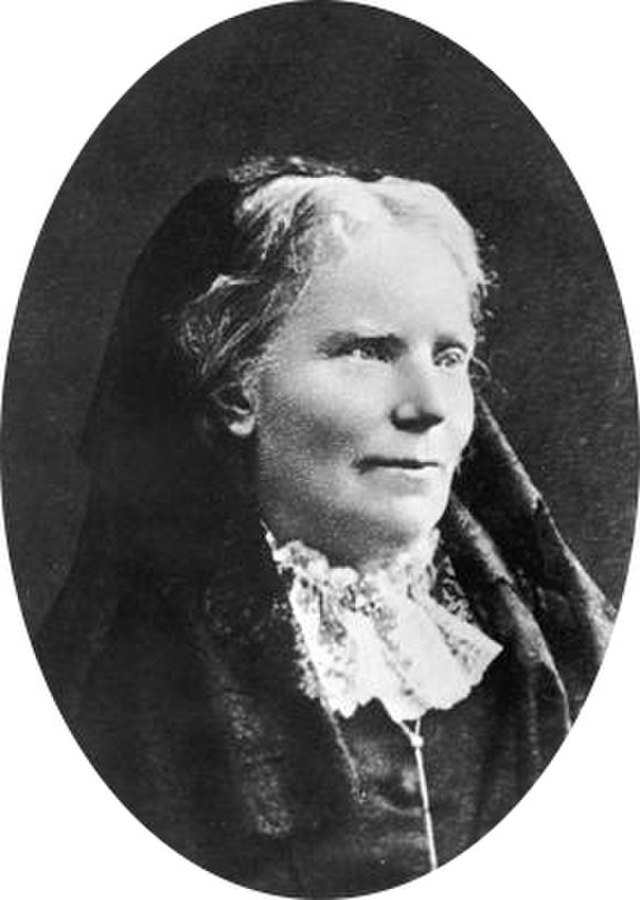
Elizabeth Blackwell’s name may sound like it belongs in a history book, but her story feels surprisingly modern. As the first woman in the United States to earn a medical degree, Blackwell didn’t just open doors for herself—she blew them wide open for generations of women who would follow her into medicine.
Born in Bristol, England, on February 3, 1821, Elizabeth Blackwell grew up in a progressive household. Her parents were firm believers in education and social reform, which was unusual at the time. Tragedy struck soon after—the death of her father left the family in financial straits. Elizabeth and her sisters had to find work to survive, which planted the first seeds of independence and determination.
Her interest in medicine wasn’t immediate. In fact, she once admitted she found the idea of anatomy a bit repulsive. That changed when a dying friend told her she would have suffered less if she’d had a female doctor. That moment stuck with Elizabeth. She began to see medicine not just as a profession, but as a calling—and a way to challenge the barriers holding women back.
In the mid-1800s, medicine was a men-only club. When Elizabeth applied to medical schools, she was turned away over and over, not for lack of ability but because she was a woman. Finally, in 1847, Geneva Medical College in New York accepted her—though the acceptance was partly meant as a joke by male students who didn’t think she would last.
Elizabeth proved them wrong. In 1849, she graduated first in her class, becoming the first woman in the United States to hold a medical degree. That diploma wasn’t just a piece of paper—it was a landmark in the long struggle for gender equality in education and professional life.
After further medical training in Paris and London, Blackwell returned to the U.S. But prejudice didn’t disappear with her degree. Hospitals refused her privileges, and many patients balked at being treated by a woman. Instead of giving up, she built her own path.
In 1857, alongside her sister Emily Blackwell (also a doctor) and Dr. Marie Zakrzewska, she founded the New York Infirmary for Indigent Women and Children. The hospital provided care for the city’s poorest residents while also giving women doctors desperately needed clinical experience. A decade later, she went further, establishing the Women’s Medical College of the New York Infirmary in 1868, training the next wave of female physicians.
Elizabeth Blackwell wasn’t just a doctor; she was also a prolific writer and reformer. She published books and essays on medicine, education, and public health, often weaving in arguments for women’s rights. Her influence wasn’t limited to the U.S.—she maintained strong ties with Europe and inspired women internationally to enter medicine and other male-dominated fields.
Today, her impact is easy to see. Women make up more than half of medical school students in the U.S., something almost unthinkable in Blackwell’s time. Every female doctor practicing today is, in some small way, walking the path she cleared.
By insisting on her right to practice medicine, she transformed the profession and widened the horizons for women everywhere.
Her life shows us that trailblazers don’t just change their own circumstances—they alter the future. Elizabeth Blackwell’s name deserves to be remembered not only as the first woman doctor in America, but as someone who proved that breaking barriers is itself a form of healing.



