
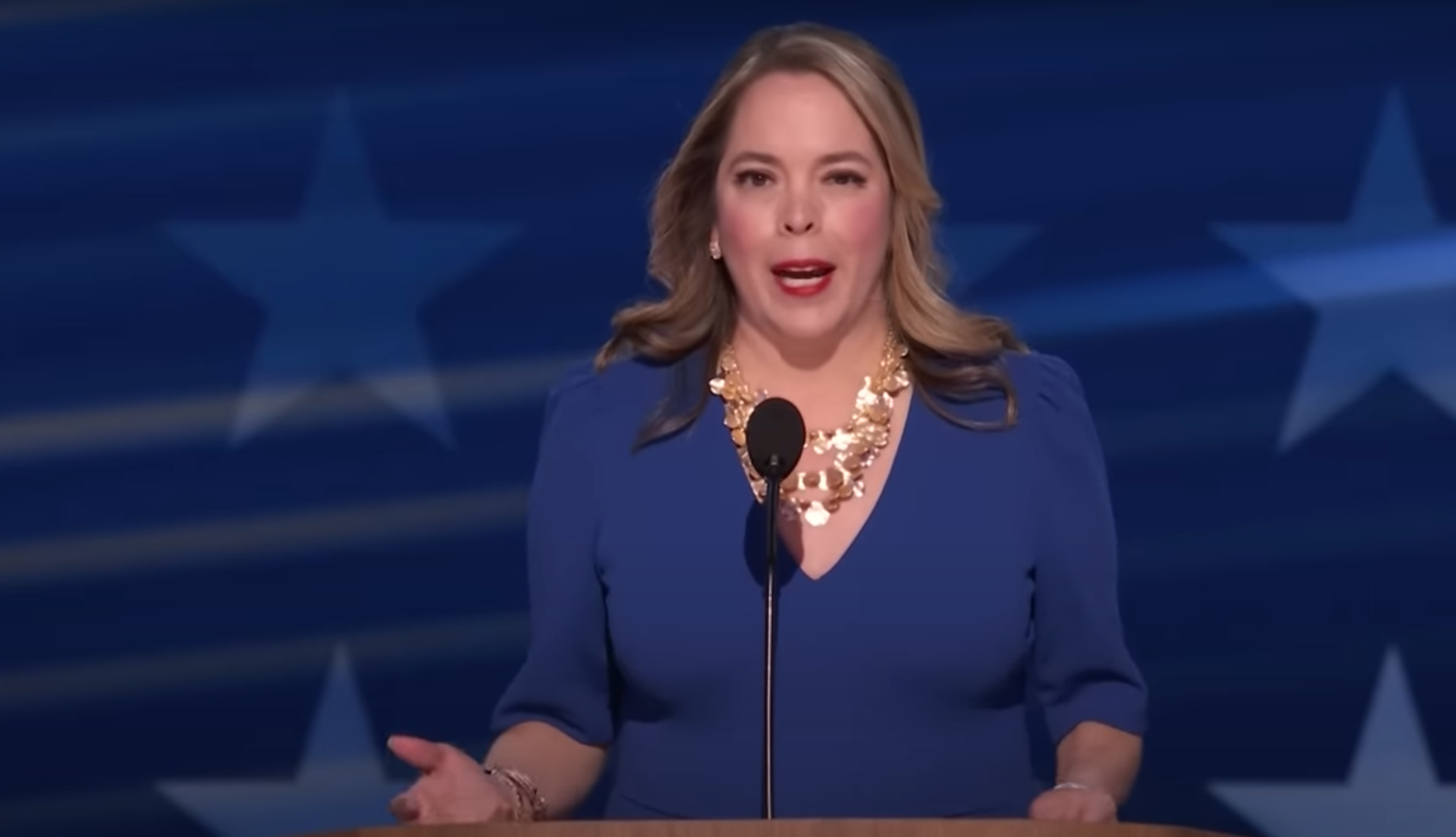
When former Vice President Mike Pence’s homeland security adviser Olivia Troye watches the news, she doesn’t just see headlines—she sees warnings. And lately, she says, those warnings feel personal.
Troye has long been outspoken about her former boss’s boss, Donald Trump. She criticized his handling of extremism, warned about his disregard for intelligence briefings, and sounded alarms over his embrace of authoritarian rhetoric. Now, as Trump targets a widening circle of critics, Troye says she can’t help but wonder if she’s next.
Her concern is rooted in a pattern. Trump has recently accused Federal Reserve Governor Lisa Cook of mortgage fraud, echoing similar claims he’s lobbed at New York Attorney General Letitia James and California Senator Adam Schiff. Both have denied wrongdoing, as Cook has, but the accusations fit a familiar playbook: paint adversaries as corrupt, then dismiss their criticism as illegitimate.
And it doesn’t stop at rhetoric. Just last week, federal agents searched the home of John Bolton, Trump’s former national security adviser. The search was carried out allegedly in connection with an investigation into whether Bolton revealed classified information in his 2020 memoir. To Troye, the search looked like retaliation.
“He ran on a campaign of retribution,” she said in a CNN interview. “I think we’re seeing it come to fruition now. Watching what happened to Bolton, I was horrified for him and his family. And I thought, am I next? Is someone going to knock on my door?”
Troye called it a chilling effect—one designed to silence critics. She noted that others, like former Homeland Security official Miles Taylor and ex-Cybersecurity chief Chris Krebs, have already faced public attacks. Now, she worries, the net is widening.
The implications, she argues, stretch beyond politics. A group of 180 FEMA officials recently warned Congress that the agency is being hollowed out and could be dangerously unprepared for a natural disaster. Some of those who signed the letter have since been placed on leave. Troye says this is how a culture of fear seeps into government service, discouraging honesty even on matters that could affect every American.
FEMA, for its part, defended its leadership, saying change is never easy and that entrenched bureaucrats have resisted reform. But Troye sees the bigger danger: that public servants are being punished not for inefficiency, but for speaking truth.
For her, the stakes are clear. “Today it’s Bolton,” she said. “Tomorrow it could be a journalist, it could be me, it could be any American citizen who criticizes the president. That is why this is so dangerous.”



