
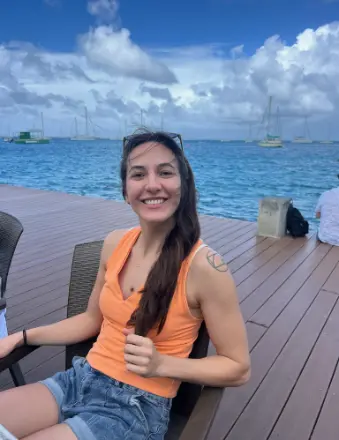
Dr. Lauren Semanchik knew something was wrong. Months before her death, the 33-year-old veterinarian had told police in two New Jersey towns that she feared for her safety. She installed security cameras at her home and even inside her car. She called and left messages. She told an officer that she was considering a restraining order against her ex-boyfriend, a state trooper. But when she asked for help, she says it never came.
On August 1, Semanchik and her boyfriend, Tyler Webb, were shot and killed outside her Franklin Township home. The man accused, Lt. Ricardo J. Santos of the New Jersey State Police, was later found dead in his car from a self-inflicted gunshot wound. Prosecutors say Santos, who once served on the governor’s security detail, had stalked Semanchik home that night. Security footage showed his Mercedes parked near her property and him moving through the woods.
Her family says the tragedy wasn’t just the result of a violent man. They argue it was also the failure of multiple police departments. On Thursday, relatives of Semanchik and Webb announced a lawsuit against the State Police and local agencies in Franklin and Washington Townships. “She was failed by every single law enforcement agency that she went to for help,” said her mother, Jennine Semanchik.
The signs were hard to ignore. Semanchik told police her ex had been harassing her, vandalized her car, and might be suicidal. She told Franklin Township police she was “especially uncomfortable” because Santos was a trooper. She left a voicemail at the station asking for help filing a restraining order. No one returned her call.
Now the fallout has extended well beyond the tragedy itself. Hunterdon County prosecutors have taken control of Franklin’s police department, placing its chief and a sergeant on leave and citing “serious concerns” about the department’s operations.
Santos, who was in his 40s, had built a reputation inside the State Police as an ambitious officer, volunteering for overtime shifts and guarding top state officials. But after his death, investigators found a note at his home in which he wrote about feeling bullied by colleagues and disillusioned with the department.
For the Semanchik family, that doesn’t change the fact that she did everything she could to protect herself. She asked for help. She installed cameras. She called police stations. And yet, she was left exposed. “What is clear,” said the family’s lawyer David Mazie, “is that if the policies had been followed, Lauren would be alive today.”



