
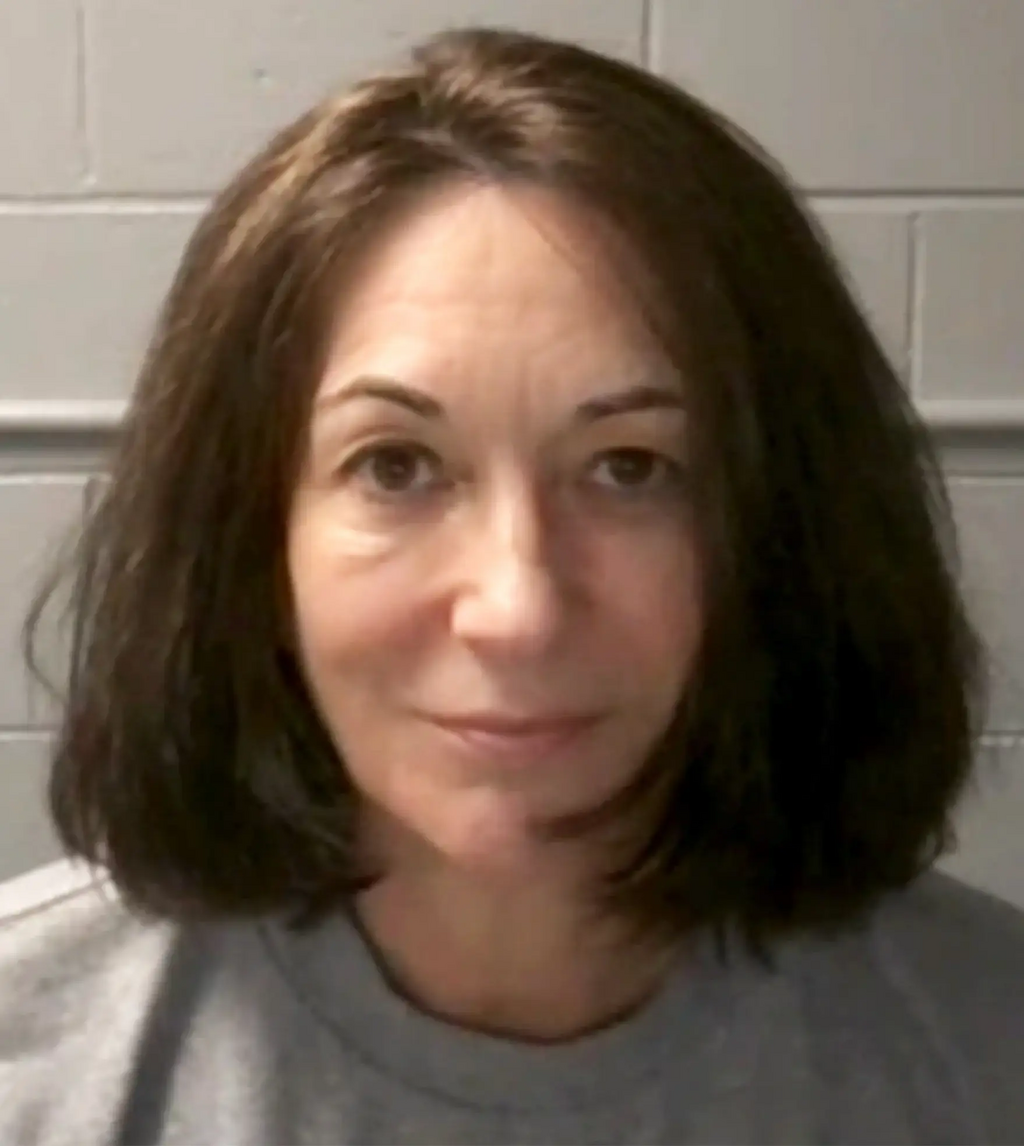
Dozens of protesters continue to line 101 Texas Avenue in Bryan, Texas with handmade signs and a shared sense of disbelief. Their target isn’t local, but rather the federal government’s quiet decision to transfer Ghislaine Maxwell, Jeffrey Epstein’s longtime partner and accomplice, to the Federal Prison Camp Bryan, a minimum-security facility sometimes referred to as “Club Fed.”
Maxwell, 63, is serving a 20-year sentence for recruiting and grooming teenage girls who were later abused by Epstein. Earlier this month, she was moved from a low-security lockup in Florida to Bryan, one of the country’s most lenient prison camps. The move immediately raised eyebrows, both in Texas and among current and former prison officials across the country.
“It’s communicating to folks driving by that, hey, there’s people concerned about something,” said Serena Wedeking, founder of the Brazos Valley Community Coalition. “Whether or not they’re necessarily on the same page, it doesn’t really matter. I think it’s important to show that active participation in our democracy, even if it’s in this little way.”
Wedeking and her group hope to spark conversation about not just Maxwell’s transfer, but transparency in government decision-making more broadly. “We’re advocating full transparency between the government and its citizens, especially when things that shift around and happen on a national level, directly affect our community,” she said.
Local political figures are voicing frustration, too. Dawn Marshall, a resident of Bryan and a candidate for Congress, said she’s heard deep unease from neighbors. “The sentiment is they don’t want her here. They think she is dangerous to the community,” Marshall explained. “They’re scratching their heads, saying, what in God’s green Earth is going on here?”
That question isn’t just rhetorical. In private corners of the federal prison world, staffers are echoing the same confusion. On a private Facebook page for current and former Bureau of Prisons employees, members expressed shock and anger at Maxwell’s transfer. “Since when are sex offenders allowed at the camp?” one asked. Another called the move “a travesty of justice.”
Experts with decades inside the Bureau share that skepticism. Robert Hood, a former BOP official and warden at Colorado’s ADX Florence supermax, said moving Maxwell to Bryan “is offensive to victims and others serving similar crimes.” Another longtime investigator said the decision “doesn’t pass the smell test.”
The Bureau of Prisons has confirmed Maxwell’s relocation but declined to explain how or why the waiver was granted. By its own rules, sex offenders typically serve their time at higher-security facilities.
The controversy comes as Epstein’s case continues to loom large over American politics. His 2019 death in a Manhattan jail—officially ruled a suicide—has fueled years of suspicion and conspiracy theories. The Trump administration’s Justice Department recently said it found no grounds to pursue further charges against Epstein associates.
For now, Bryan residents are left to process the fact that one of the world’s most notorious sex offenders is serving her time in their backyard—on a campus with no walls, no razor wire, and plenty of unanswered questions.



