
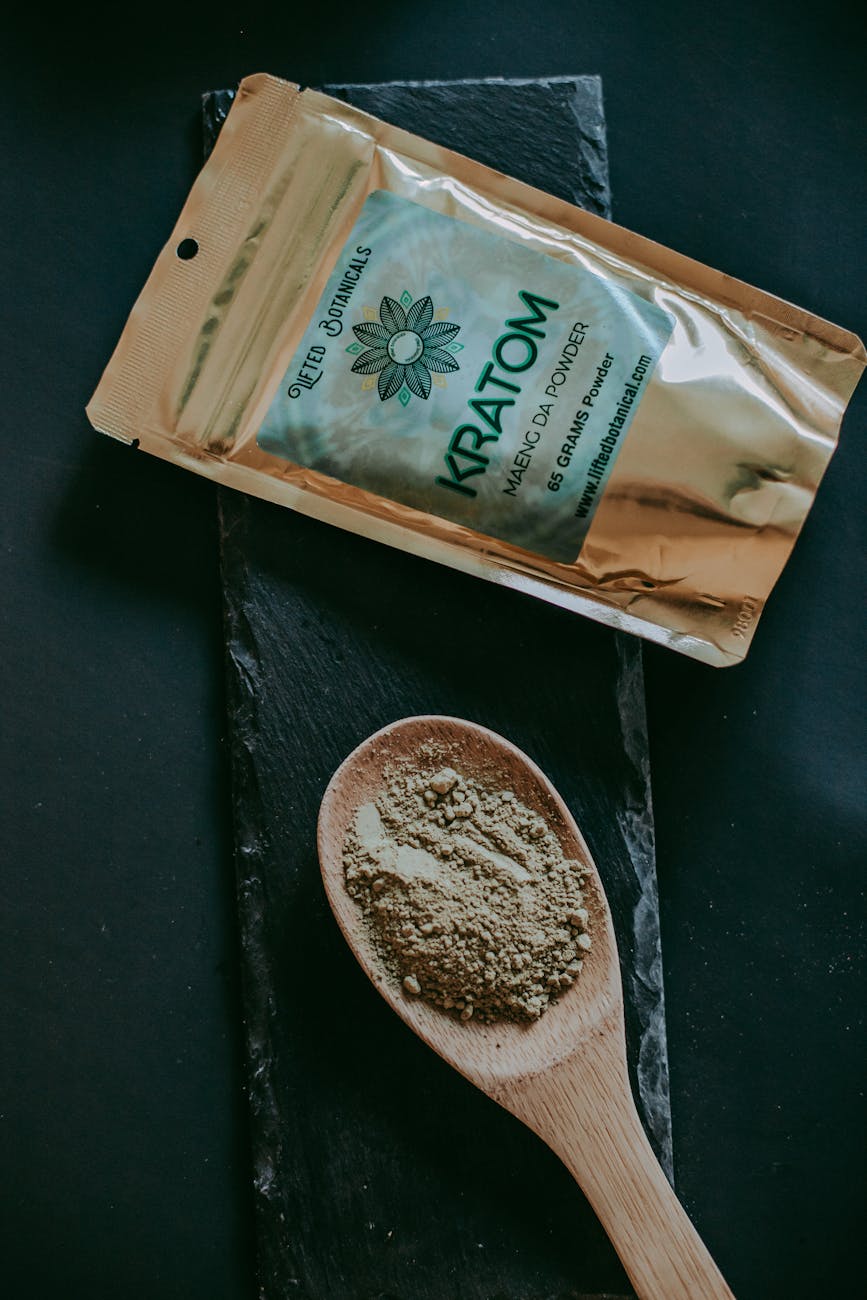
The Food and Drug Administration is warning parents to keep a closer eye on what’s being sold in gas stations, vape shops, and corner stores, as more states move to crack down on kratom — a plant-based substance that’s being marketed as natural and harmless but, in some cases, is proving addictive and even deadly.
For Emily Beutler, kratom came wrapped in the promise of relief. She says she first heard about it while visiting Sedona, Arizona. A healer told her it would “take away your anxiety” and was “healthy” for her. Intrigued, she stopped by a kava bar for a kratom drink. “I literally thought I found a miracle pill,” Beutler told Elizabeth Vargas Reports. The initial buzz felt blissful. Her anxiety eased. And she believed she’d found a safe, natural fix.
But things escalated quickly. Beutler went from one kratom drink a day to multiple shots in each drink, then to taking kratom pills from gas stations. Soon she was consuming 20 capsules a day, then moving on to pure powder — as much as 30 to 40 grams at a time, several times a day. It took her a year and a half to quit. She didn’t need formal rehab, but she says many people do.
Dr. Jeffrey Swisher, chairman of anesthesiology at California Pacific Medical Center, says her story is far from unique. He recalled a close friend whose son became addicted in high school and needed help from a Narcotics Anonymous–type program to stop. Swisher explains that kratom is an opioid agonist — not technically an opioid, but it acts on the same receptors in the brain. And while rumors about its potency compared to morphine can be misleading, one extract, known as 7-OH, is especially strong.
Pamela Mauldin knows the worst outcome firsthand. Her son died from kratom toxicity. She says the products — sold as gummies, drink shots, and tablets — shouldn’t be on shelves at all. “It kills people,” she said. “I want it off the shelves. It’s not safe.”
This week, Florida became the latest state to act, banning 7-OH and classifying it alongside meth and fentanyl. It’s the eighth state since March to outlaw the extract. Florida Attorney General James Uthmeier called it “so dangerous” that the state had to “take immediate action.”
FDA Commissioner Dr. Marty Makary says kratom’s rapid spread has gone largely unnoticed. “It’s just been off the radar, nobody’s been talking about it,” he said. “Nobody has statistics on how many people have died from it yet. But physiologically, it functions like oxycontin or morphine.”
Florida Poison Control Director Dr. Cory Howard says that makes it especially hard for parents to protect their kids. “It’s sold everywhere,” he said. “It’s hard to do that.”
For Beutler, the fight is now personal. She runs “QuitK,” an advocacy effort to warn others about the drug that once convinced her it was the answer — before it nearly took over her life.



