
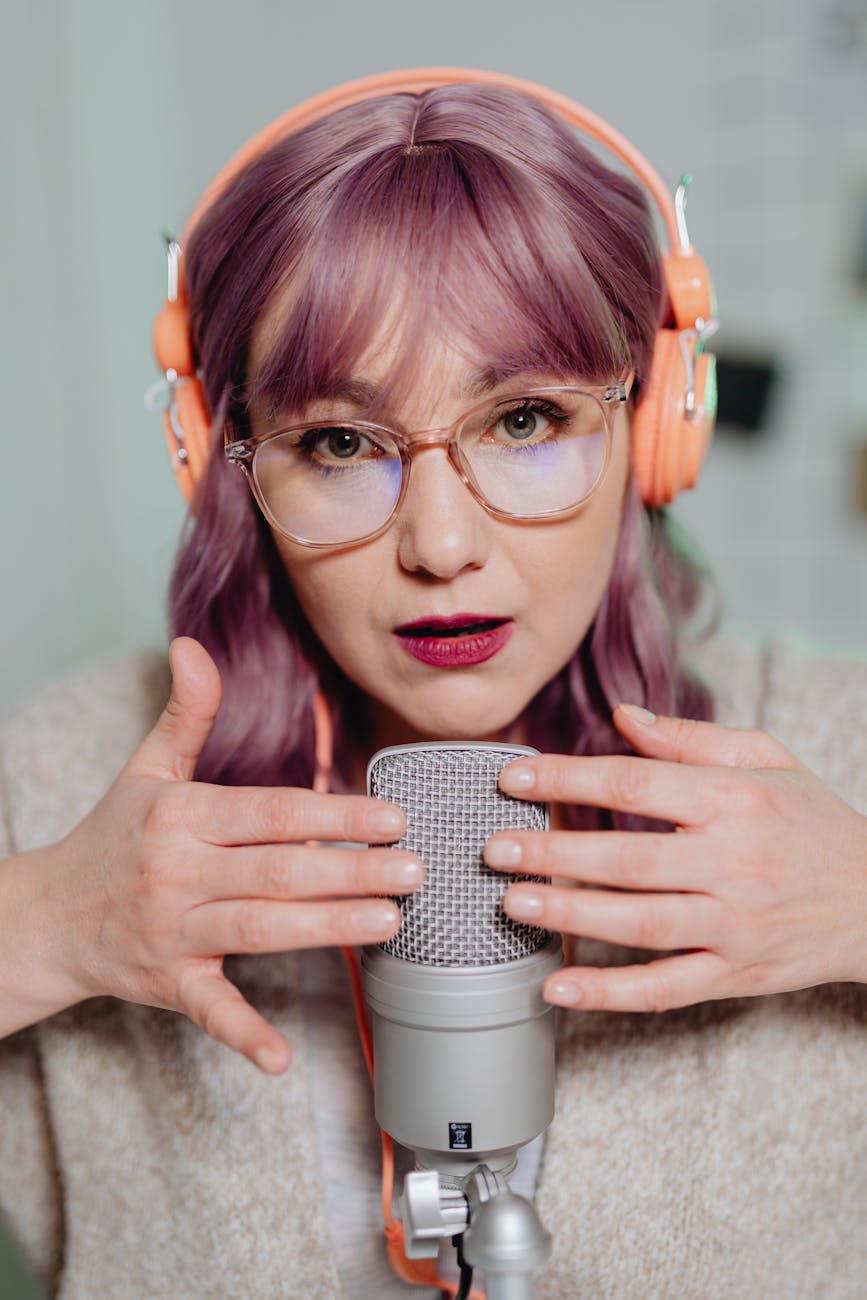
Autonomous sensory meridian response, or ASMR, used to be a niche corner of the internet, a place where curious bystanders would pop in and marvel at the clicks, whispers, pops, and other calming triggers of this bubbling sub-genre. Today, ASMR is a global phenomenon. Described by those who feel it as a pleasant sensation that starts at the top of the head and works its way down the spine, ASMR can be relaxing but for some it’s a deeply euphoric experience.
Few have shaped this world more than Maria Viktorovna, often called the “ASMR queen.” With more than 1.2 billion views on her YouTube channel, she is one of the most recognizable figures in the genre. Viktorovna began posting videos a decade ago, experimenting with unusual triggers that range from softly brushing a microphone to role-playing scenarios, such as pretending to shave a celebrity’s face — a request that came directly from her audience.
The format may seem unconventional, even strange, to outsiders. Yet, since the first ASMR videos appeared online in 2009, the practice has surged in popularity, finding its way into mainstream advertising, including a 2019 Super Bowl commercial. In 2014, Viktorovna left her receptionist job to work on her channel full time. While her success has brought financial rewards, she says the most meaningful part of her work comes from viewers who write to say her videos helped them through hardship, anxiety, or insomnia.
Scientific interest in ASMR has grown alongside its popularity. Dr. Craig Richard, a physiology professor at Shenandoah University in Virginia, has studied how ASMR activates the brain. His research suggests only about 20 percent of people are wired to experience it, but for those who do, it can lead to measurable physical changes, such as lowered blood pressure and heart rate. He believes more clinical research could determine whether ASMR has therapeutic applications.
Some entrepreneurs are already testing the concept in physical spaces. In New York City, Whisper Wave offers in-person ASMR “spa” treatments. Founder Rebecca Benvie sees the business as a natural evolution of the online videos, filling a gap for those who want to experience ASMR beyond their screens.
Still, most creators, including Viktorovna, remain committed to online platforms, where their work is accessible to anyone, anywhere. For her, ASMR offers something simple yet profound — a way to create “a little island of peace” in the middle of daily stress.
As Viktorovna continues to innovate within the genre, the audience for ASMR shows no sign of slowing. And while the science is still catching up to the phenomenon, its cultural reach — and the quiet connection it fosters — has already transformed what relaxation can look and sound like in the digital age.



