
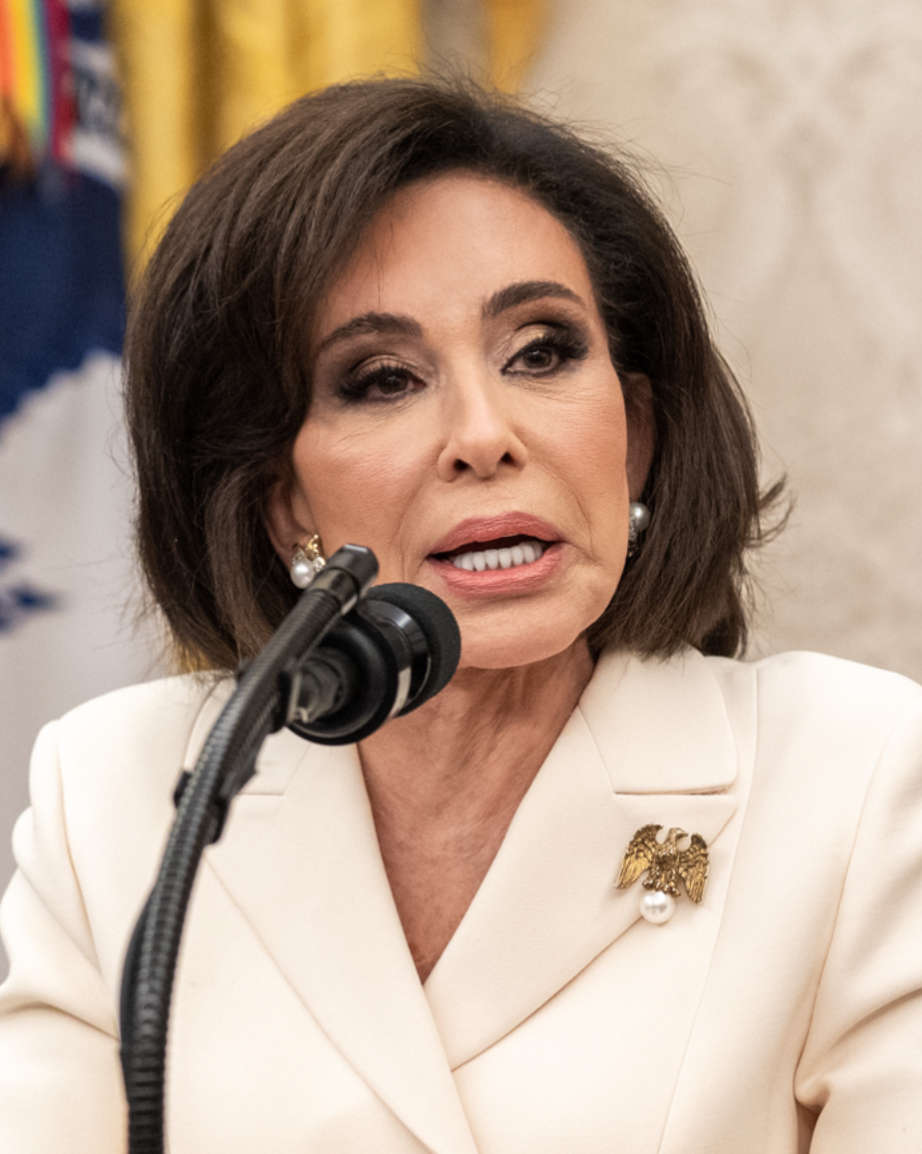
Jeanine Pirro, a former Fox News personality and longtime Trump ally, has been confirmed as the U.S. Attorney for the District of Columbia, this position puts her directly at the center of the federal government’s prosecutorial machinery. The Senate confirmed her appointment along party lines late Friday, advancing one of President Trump’s most controversial nominations to date.
Pirro’s confirmation follows the failed nomination of Ed Martin, a conservative activist whose outspoken defense of January 6th rioters proved too divisive, even within the Republican-controlled Senate. With Martin withdrawn, Trump turned to Pirro—an outspoken figure known more for incendiary commentary than for courtroom leadership in recent years. This isn’t to say that Pirro doesn’t have the resume for the job. She previously served as a judge and district attorney in New York, but more recently she was a prominent talking head on Fox News where she played a major role in amplifying conspiracy theories about the very institutions she will now lead.
The choice of Pirro is in line with a major trend of the Trump administration: rewarding personal loyalty. Pirro has been outspoken about her beliefs of voter fraud following the 2020 election. She was central to the Dominion Voting Systems defamation lawsuit that ultimately cost Fox News over $787 million in a historic 2023 settlement. Internal communications revealed during litigation described Pirro as reckless and unfit for live television—words from her own colleagues.
Pirro’s new jurisdiction covers some of the most politically sensitive prosecutions in the country. The U.S. Attorney for the District of Columbia handles high-profile cases involving federal employees, elected officials, and national security matters—many of which intersect with the very agencies Pirro has spent years criticizing. She has publicly maligned the FBI, the Department of Justice, and the courts as tools of a “deep state” determined to undermine Trump.
The concern among legal experts and former officials is not just about her history of inflammatory rhetoric, but about the precedent it sets. A former prosecutor and judge herself, Pirro will now be expected to work closely with the same law enforcement officials she has previously suggested should be fired or even imprisoned. Her confirmation raises questions about her ability to act impartially—and about whether the office itself can maintain its independence amid ongoing political pressure.
Critics also point to the erosion of traditional norms in how top legal appointments are made. Rather than selecting from a pool of experienced federal prosecutors or legal scholars, Trump has increasingly turned to television personalities and political loyalists. Pirro’s nomination, many argue, reflects a broader effort to politicize the justice system from within—replacing career officials with ideologically aligned operatives.
While some conservatives have defended the appointment by pointing to Pirro’s earlier legal career, most acknowledge that her recent profile has been shaped far more by primetime segments than courtrooms. Trump himself has celebrated her combative style and public devotion, but that very loyalty to him—above institutions or precedent—is what alarms her detractors.
The position Pirro now holds is not ceremonial. It comes with the power to direct federal prosecutions in the nation’s capital and to influence major cases tied to the Trump administration’s ongoing legal entanglements. That includes cases related to the January 6th insurrection, civil rights violations, and high-level government corruption.
With her confirmation, Pirro joins a growing number of Trump-era appointees whose roles in federal law enforcement are being scrutinized for partisan alignment. Legal observers warn that her leadership could result in selective prosecutions, internal staff turnover, or even the obstruction of ongoing investigations. Others fear that her presence will accelerate a chilling effect within the DOJ, discouraging rank-and-file attorneys from pursuing politically sensitive cases.



