
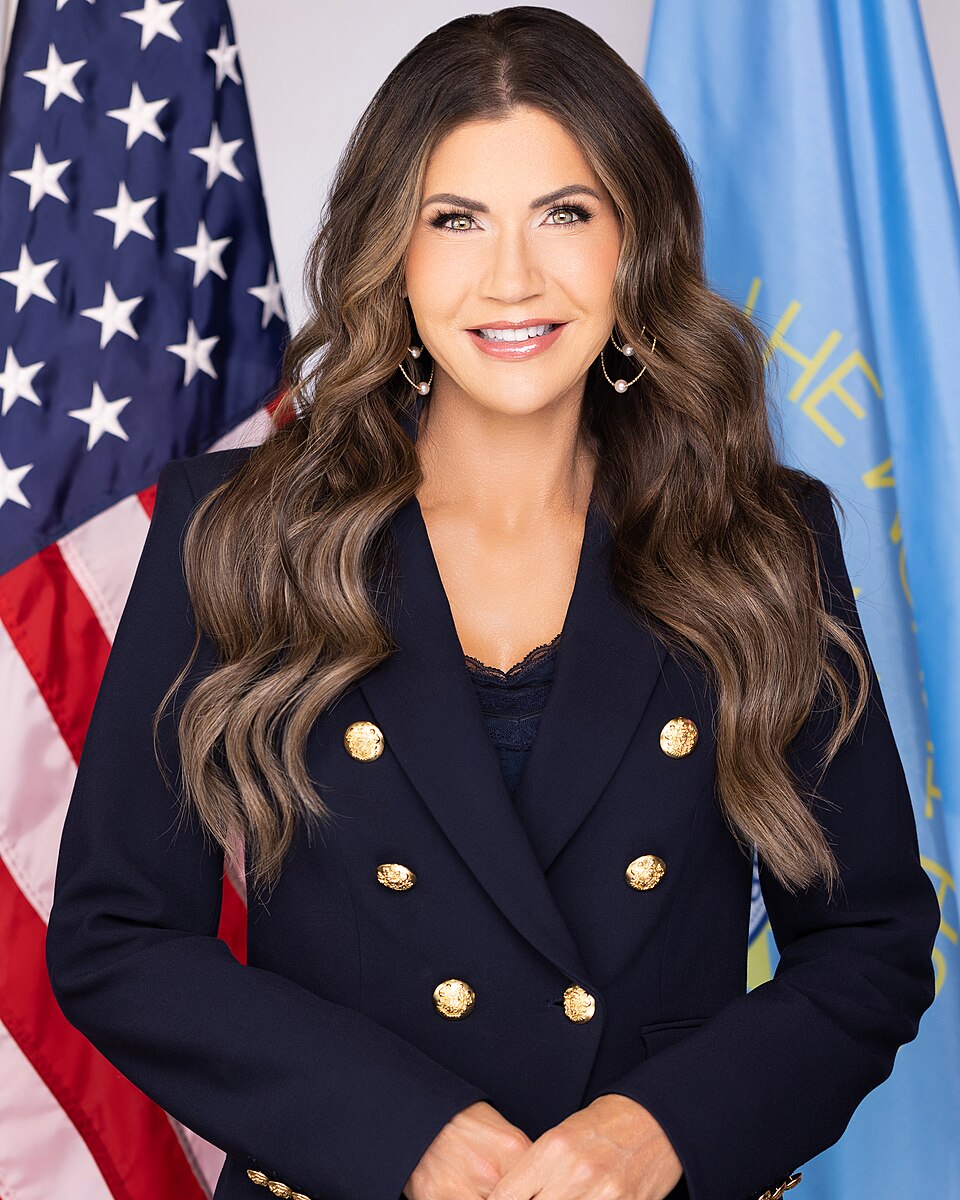
Homeland Security Secretary Kristi Noem signed a data-sharing agreement with Chilean Public Safety Minister Luis Cordero Vega on Wednesday, formalizing a new step in bilateral cooperation aimed at disrupting transnational criminal networks and improving migration controls.
Speaking from the Chilean capital, Noem announced that the United States and Chile had entered into a preliminary memorandum of understanding (MOU) under the Biometric Identification Transnational Migration Alert Program (BITMAP). The program facilitates real-time biometric data exchanges between partner nations, allowing authorities to identify and track individuals suspected of criminal or terrorist activity.
“This arrangement is going to serve as a bridge to help Chile and the United States work towards bringing criminals to justice and knowing who is in our countries perpetuating crimes,” Noem said. “Biometric data is crucial for vetting, tracking, and holding accountable the worst of the worst criminals.”
The agreement comes as the Trump administration intensifies efforts to combat transnational organized crime, with a particular focus on groups such as Tren de Aragua, a Venezuela-based gang recently designated a foreign terrorist organization by the White House. The group has expanded its reach across South and Central America, including into Chile, and has been linked to human trafficking, narcotics smuggling, and violent crime.
The new pact allows Chilean authorities to collect biometric data—such as fingerprints and iris scans—of migrants and criminal suspects entering or leaving the country and share that information with the U.S. Department of Homeland Security (DHS). The goal is to improve screening procedures, disrupt illicit networks, and prevent suspected criminals from entering the United States.
“We moved much closer today to building a biometric identification framework that will make America, Chile, and the entire Western Hemisphere safer,” Noem said. She also praised Chile’s recent enhancements to border security and its commitment to the U.S. Visa Waiver Program, which requires strict compliance with data-sharing and travel security standards.
Chile has faced increasing challenges from criminal organizations in recent years. Among the most high-profile examples cited by Noem was a series of burglaries in the United States allegedly carried out by a network of South American thieves, some of whom traveled through Chile before entering the U.S. Prosecutors in Florida have charged suspects in connection with break-ins at the homes of professional athletes and other high-profile Americans.
“These groups travel across South America to the U.S. to rob American citizens,” Noem said. “In one recent case, they flew to the United States and broke into six different athletes’ homes during a crime tourism spree. They’re now facing charges in Florida.”
Chile has responded by creating a screening process for U.S.-bound travelers that uses information-sharing protocols shard by American intelligence agencies with an eye for taking down criminal networks in the country. On top of that, Chile has also enrolled in the U.S. Security Alliance for Fugitive Enforcement (SAFE) and Electronic Nationality Verification programs.
Noem stressed the importance of these partnerships, sayinf that “laws are only as strong as those who are willing to enforce them,” before thanking Chilean ministers for coorperating with the United States.
Critics of expanding biometric surveillance programs have previously raised concerns about privacy, data protection, and due process. But Noem said the agreement would enhance transparency and focus exclusively on identifying individuals “producing or planning nefarious activities.”
“This isn’t about punishing migration,” she said. “It’s about using knowledge to protect our law-abiding citizens and prevent the movement of dangerous individuals across borders.”
The Chilean government did not immediately release a statement on the agreement.
Noem ended the meeting by reiterating that the success of U.S. homeland security operations is only possible with the help of their international partnerships. “With this agreement,” she said, “we are building the tools we need to know who’s coming, stop the people who mean harm, and keep our countries safer.”



