
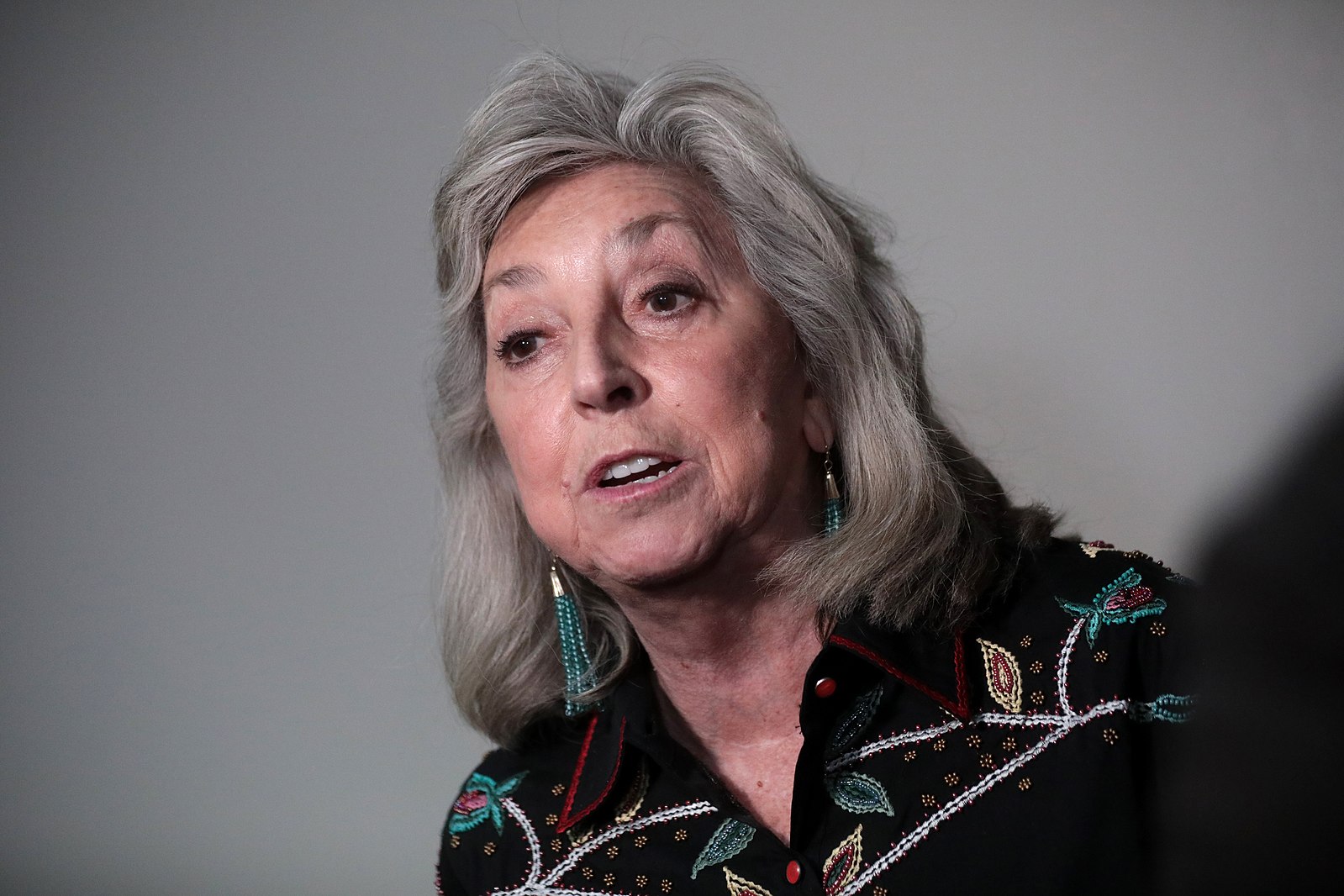
Representative Dina Titus (D-NV) delivered a blistering rebuke of the Trump administration’s foreign policy priorities during a House Foreign Affairs Committee hearing this week, accusing the State Department of gutting U.S. diplomatic infrastructure while empowering global adversaries like China and Russia.
In a five-minute exchange that quickly became one of the most scathing of the hearing, Rep. Titus grilled a senior State Department official on reports of mass consulate closures, secretive staffing cuts, and unexplained changes to the Foreign Affairs Manual that critics say make it easier to fire career diplomats.
One of Titus’ main concerns is the closing of consulates in places where the U.S. has strategic interests — from South Korea to Greece — and whether or not this plays into the hands of a foreign rival like China. Titus asked, citing a preliminary notification to Congress earlier this year indicating the department was considering closing dozens of U.S. consulates around the globe, including the one in Thessaloniki, Greece.
Titus said that the Thessaloniki post is of vital importance to military and diplomatic operations in the Eastern Mediterranean. Titus continued, questioning if abandoning these diplomatic posts would make room for authoritarian regimes to fill the vacuum.
In response, the State Department official downplayed the concerns, saying the department was conducting a cost-benefit review of overseas posts but that “no decisions have been made.”
Titus was unconvinced. “China is expanding its diplomatic footprint while we’re decreasing ours. That’s not in our strategic interest,” she said.
She didn’t just take issue with the closing of diplomati posts, but domestic staffing issues within the State Department as well. Titus then took aim at a recent wave of reductions in force (RIFs), in which over 1,300 employees were sent home. She accused the department of evading oversight and operating with a lack of transparency.
Citing a memo that surfaced in May, Titus challenged the claim that foreign service employees’ current assignments wouldn’t affect RIF decisions. She pointed out that the department had recently revised the Foreign Affairs Manual to make it easier to terminate staff — all without consulting Congress.
“Committee staff tried repeatedly to get details about the RIFs,” she said, “and were told the department wouldn’t share them to ‘protect the dignity of the workforce.’” Then, with evident frustration, she asked, “What about the dignity of the 1,300 people who were just told ‘thanks but no thanks’?”
The official responded by comparing the cuts to downsizing under previous administrations, citing reductions under Presidents Clinton and Obama. But Titus dismissed the analogy, saying many of those fired were let go not because of performance or redundancy, but simply because of where they were posted.
This hearing threw fuel on the fire of concerns that the Trump administration is purposefully scaling back the global presence of the U.S. at a moment when our geopolitical rivials are making extreme headway.
With China investing in new embassies and international influence projects across Africa, Asia, and the Mediterranean, Titus and others argue that retrenching U.S. diplomatic resources sends the wrong message — and creates long-term risks.
In the final moments of her time, Rep. Titus made it clear that the administration’s assurances weren’t enough. “We’re not hearing specifics,” she said. “We need accountability, and we need answers — before more damage is done.”



