
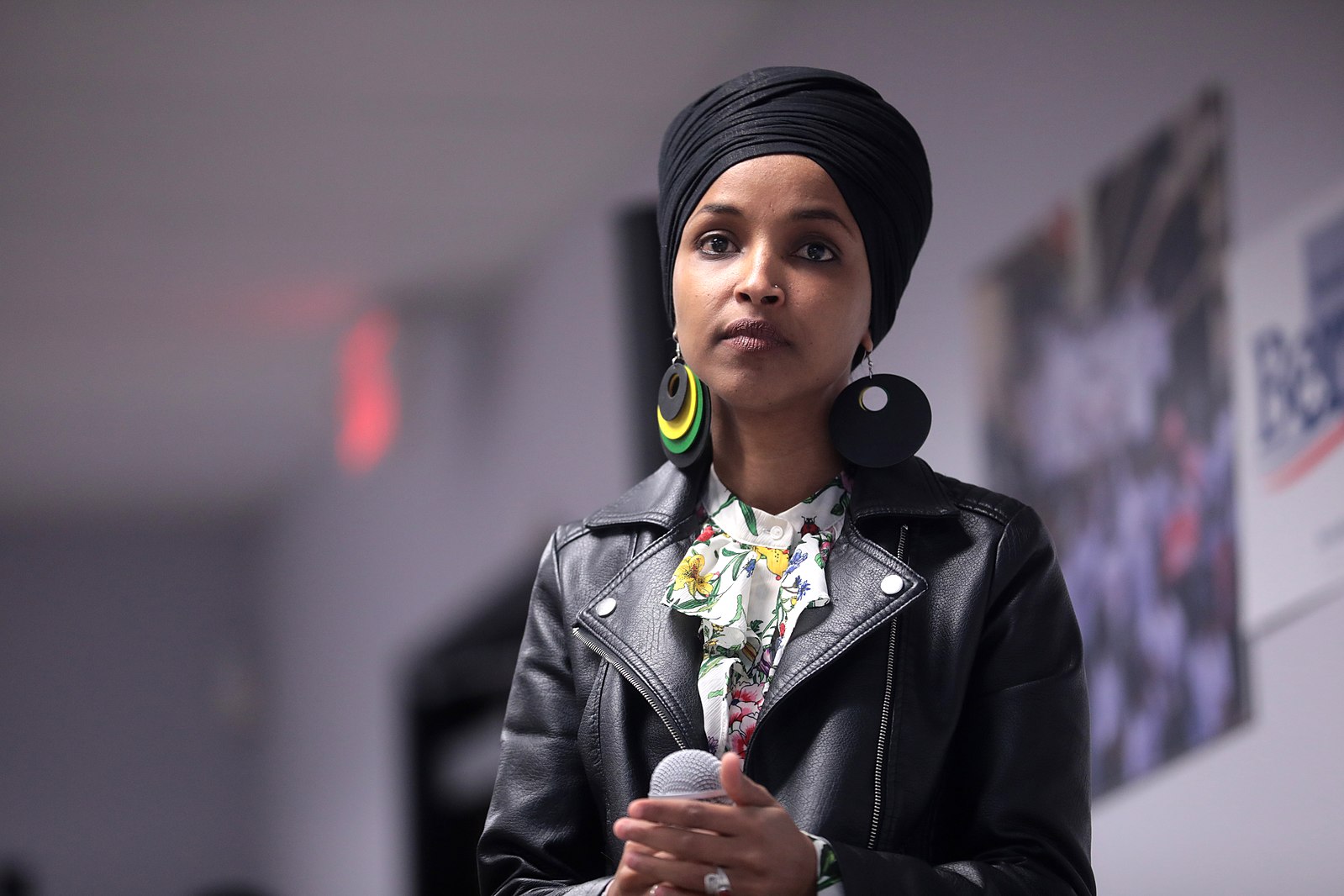
In a passionate speech on the House floor Friday, Rep. Ilhan Omar (D-MN) called on the United States to join a global treaty banning the production and use of nuclear weapons, marking the 80th anniversary of the U.S. bombings of Hiroshima and Nagasaki.
“The era of nuclear weapons will only end in one of two ways,” Omar warned. “Either we will abolish these horrific weapons from the face of the earth, or we will use them and abolish humanity instead.”
Omar’s remarks were delivered as part of a special session organized by Rep. Jim McGovern (D-MA), and they arrive amid renewed global tensions and escalating fears over nuclear escalation, particularly in conflicts involving Russia, Iran, and India-Pakistan.
The Treaty on the Prohibition of Nuclear Weapons (TPNW), adopted by the United Nations in 2017 and now signed by more than half of the world’s countries, aims to legally ban the development, testing, production, and use of nuclear arms. The United States, along with all other nuclear-armed nations, has refused to sign the treaty.
Omar urged U.S. leaders to see disarmament as both possible and necessary. She pointed to historic examples of successful rollback, including the 1980s arms reduction treaties between Ronald Reagan and Mikhail Gorbachev, and South Africa’s decision to dismantle its nuclear arsenal in the 1990s.
Her remarks also showed the domestic legacy of U.S. nuclear testing, particularly its impact on rural communities near testing sites. Omar invoked the Trinity test conducted in New Mexico in July 1945 and the long-standing health consequences suffered by “downwinders” — residents exposed to radioactive fallout.
“These weapons have been used thousands of times,” Omar said. “And their primary targets have been Americans.”
Aside from the overtly destructive nature of these weapons, the representative from Minnesota underlined the extreme health burdens faced by these communities. They deal with rare cancers, poisoned water, and polluted air; all consequences of the acts of U.S. government that have gone largely unacknowledged for decades. While some compensation has been offered through limited federal programs, Omar described the efforts as “small steps.”
“We need urgency,” she said. “We need political will.”
Omar’s speech drew attention to recent near-miss escalations involving nuclear-armed states. She cited 2024 skirmishes between India and Pakistan, Israeli airstrikes on Iranian facilities, and the ongoing war in Ukraine as flashpoints that could easily spiral into catastrophe.
Even with decades of evidence against the use of nuclear weapons, the U.S. government has continued to maintain and modernize its arsenal, citing national security. Support for disarmament remains limited in Congress, and the Trump administration has not signaled any intent to sign the TPNW.
Still, Omar framed her call as a moral imperative, one that places human survival above military doctrine.
“Just as we’ve gotten terrifyingly close to nuclear war,” she said, “we’ve also come close to disarmament. It’s not a pipe dream.”



