
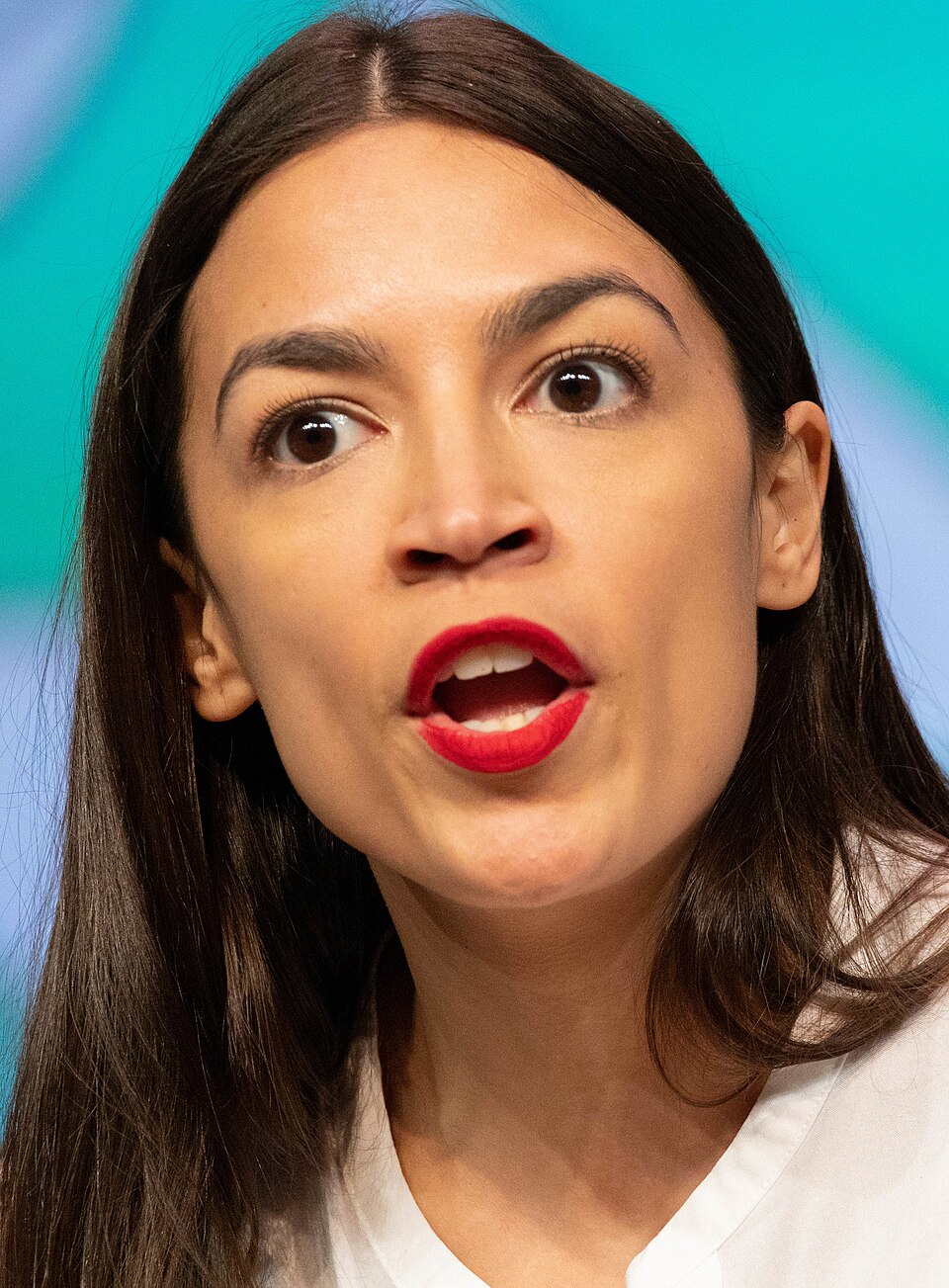
The House Ethics Committee concluded Friday that Rep. Alexandria Ocasio-Cortez (D-NY) violated congressional gift rules by accepting services and favors related to her 2021 Met Gala appearance, including a complimentary ticket for her partner and delayed payments for items she wore to the event.
In a report that was as much about procedure as perception, the bipartisan ethics panel found that although Ocasio-Cortez made a “significant” effort to comply with the rules governing gifts, her team’s handling of payments, reimbursements, and vendor relationships ultimately fell short of full compliance.
At the heart of the committee’s finding was the question of whether Ocasio-Cortez improperly accepted items of value — including designer services, hairstyling, and the iconic “Tax the Rich” gown she wore — without promptly paying for them or providing fair market value compensation. In spite of the fact that AOC used personal funds to rent her clothing and was open about her intentions to follow House rules, the panel decided that payment delays and underpayments, even if unintentional, constituted violations.
“The Committee found that she failed to fully comply with the Gift Rule by impermissibly accepting a gift of free admission to the 2021 Met Gala for her partner and by failing to pay full fair market value for some of the items worn to the event,” the report said.
Crucially, the committee emphasized that it did not find evidence that Ocasio-Cortez “intentionally underpaid” or knowingly sought personal gain. The lapses, it said, appeared to stem from reliance on a campaign staffer and outside counsel to handle logistical and legal questions surrounding her attendance at the exclusive fundraiser for the Metropolitan Museum of Art.
In a statement, Ocasio-Cortez’s office expressed appreciation that the committee acknowledged her efforts at compliance and signaled her intention to resolve the matter.
“She accepts the ruling and will remedy the remaining amounts, as she’s done at each step in this process,” said chief of staff Mike Casca.
Still, the report raises broader questions about how high-profile lawmakers navigate the blurred lines between public service, celebrity, and political messaging in an age where symbolism is currency — and missteps, even minor ones, can carry amplified consequences.
The Met Gala appearance drew headlines in 2021 not just for Ocasio-Cortez’s presence at an event known for opulence, but for the stark political statement made by her white Brother Vellies gown, emblazoned with red lettering that read “Tax the Rich.” The moment was interpreted by supporters as a bold insertion of progressive messaging into elite spaces — and by critics as hypocrisy.
Now, with the Ethics Committee’s ruling, the dress — and the moment — returns to the spotlight with a different context: not as a fashion statement, but as an ethics infraction.
Meanwhile, in a separate ruling issued Friday, the committee announced that Rep. Mike Kelly (R-PA) did not violate insider trading laws, though his wife’s purchase of stock in a steel company while Kelly was engaged in official business with that company raised concerns. The panel noted it was unable to determine the propriety of the trade due to a lack of full cooperation from Mrs. Kelly and instructed the congressman to divest any shares in Cleveland-Cliffs.
Kelly responded by calling the nearly five-year investigation a “distraction,” touting his advocacy for the 1,400 workers at the Butler Works plant owned by the company in question.
Taken together, the two reports highlight the tension between public trust and the behind-the-scenes realities of navigating the rules of Congress. They also underscore how the same system of accountability can yield dramatically different public narratives depending on who’s involved — and how transparent they are about the process.
For Ocasio-Cortez, the outcome represents a cautionary tale: not one of scandal, but of scrutiny — particularly for lawmakers whose prominence ensures that even the smallest details will be examined with exacting care. The fine, expected to be paid from her personal funds, will likely be modest. The political lessons, however, may resonate longer.
And yet, the juxtaposition is striking.
About a month and a half prior before Ocasio-Cortez was ordered to reimburse expenses tied to a rented gown and gala attendance, news circulated that the U.S. government had officially accepted a Boeing 747-8 luxury jetliner from the Qatari government — a gift reportedly valued in the hundreds of millions of dollars. The plane, which President Donald Trump referred to as an offer he’d be “stupid” to turn down, is being prepared by the U.S. Air Force for executive airlift, possibly as a future version of Air Force One.
While the full terms of the jet deal remain classified, the optics are hard to ignore. A young progressive lawmaker is penalized for mishandling reimbursements over fashion rentals and guest tickets — an infraction the ethics committee itself described as unintentional — while a president receives a foreign government’s luxury aircraft with little public debate.
The contrast raises enduring questions about how power, privilege, and accountability are applied in Washington. Who is scrutinized for the gifts they accept — and who is simply allowed to board the plane?



