
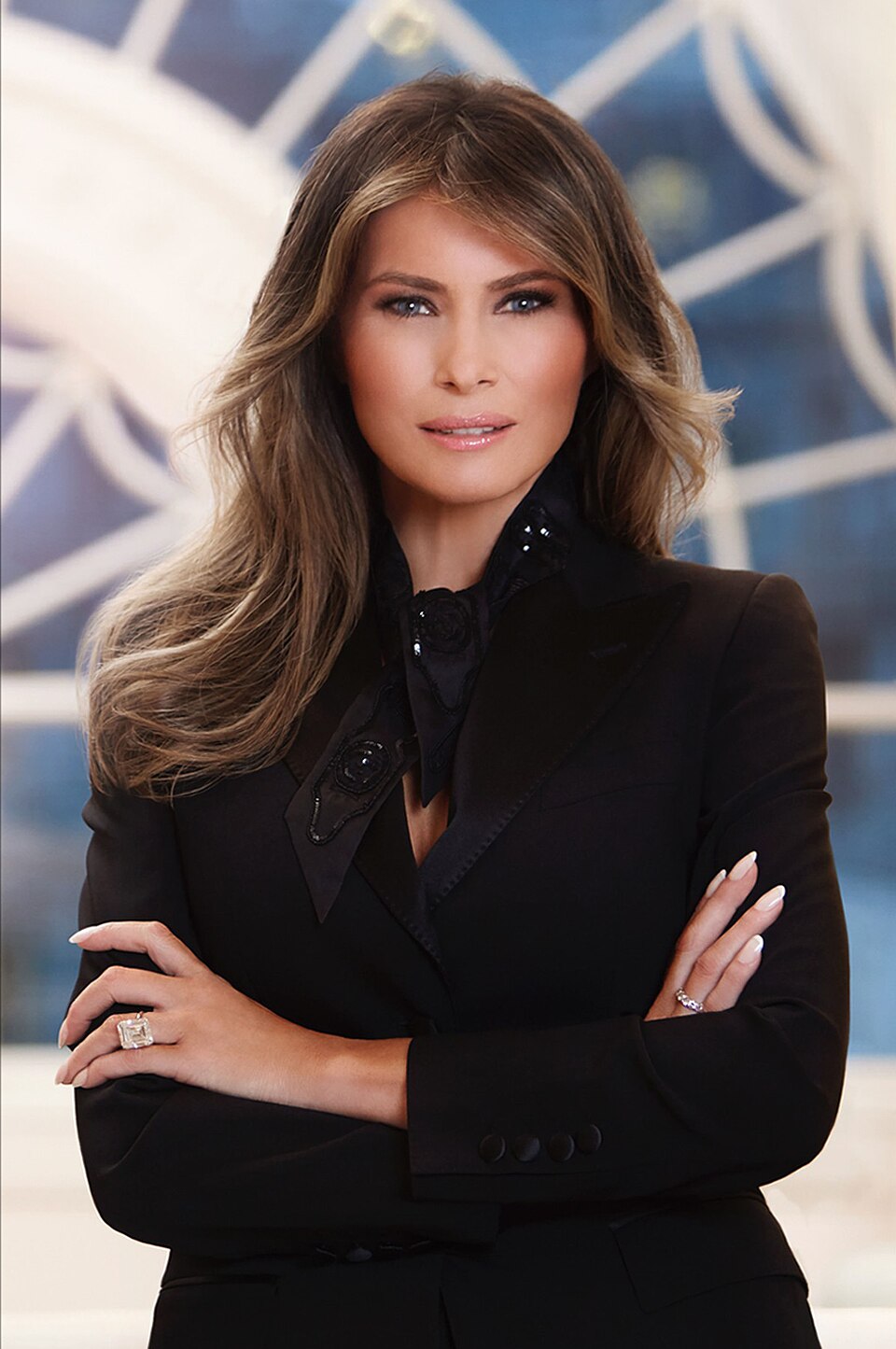
House Republicans have put forward a new proposal that looks to rename the Kennedy Center’s Opera House after First Lady Melania Trump, a decision that has kicked up a debate over the politicization of one of the nation’s most iconic cultural institutions.
The amendment, introduced by Rep. Mike Simpson (R-Idaho), was adopted by the House Appropriations Committee as part of a broader Interior Department funding package. The effort to rename the Kennedy Center isn’t likely to make it through the Democrat-controlled Senate, but it does show the lengths to which the Trump administration will go to imprint its legacy on the capital’s cultural landscape.
The Kennedy Center’s Opera House—the second-largest theater at the complex—does not currently bear an individual’s name. Proponents of the change argue that Trump should be honored for her support of the arts and humanities during her tenure as First Lady.
“She has shown support and commitment in promoting the arts,” Simpson said during committee discussions, defending the amendment as a tribute rather than a political maneuver.
But the proposal has drawn criticism from Democrats, including Rep. Chellie Pingree (D-Maine), ranking member on the Interior subcommittee, who expressed surprise and concern at the provision’s inclusion in the broader funding package. Pingree opposed the amendment during the committee’s markup session, noting that the renaming initiative had not been discussed or vetted in advance.
The move comes amid a broader pattern of efforts by the GOP to rename government facilities, geographic features, and commemorative events in alignment with conservative priorities. In recent months, Republican lawmakers have proposed renaming everything from military bases to national observances, often in ways that align with pro-Trump messaging.
The effort also coincides with the Trump administration’s push to reshape the Kennedy Center’s leadership. During his presidency, Donald Trump dismissed several members of his board. He announced he would serve as the center’s board chair—a move seen by some as a break from tradition and an assertion of executive influence over cultural institutions.
While the proposal has pumped up some members of the Republican base, the measure faces long odds in the Senate, where overwhelming Democratic support would be necessary to pass any funding legislation. Even within the House, the amendment’s inclusion in a broader appropriations bill is likely to complicate negotiations and provoke additional scrutiny from lawmakers focused on depoliticizing the arts.
The Kennedy Center, established in 1964 as a “living memorial” to President John F. Kennedy, has long aimed to remain above partisan politics. Its performance spaces—including the Concert Hall, Opera House, and Eisenhower Theater—are rarely named after living individuals, especially those with recent ties to political office.
Melania Trump, a former model and advocate for child-focused initiatives during her time as First Lady, launched the Be Best campaign, which focused on children’s well-being, social media behavior, and opioid abuse. She has also participated in several cultural diplomacy efforts and holiday events at the White House, though she is not widely known for specific advocacy in the performing arts.



