
Carolyn Bryant Donham, a name etched into one of the darkest chapters of American history, played a pivotal role in the brutal death of Emmett Till, a 14-year-old Black boy, in 1955. Her actions and accusations served as the catalyst for one of the most horrifying racially motivated crimes of the 20th century, sparking outrage and galvanizing the civil rights movement. To understand her role, it is essential to unpack the events leading up to Till’s murder, the aftermath, and the legacy that her lies left behind.
The Incident: A Fateful Encounter in Mississippi
In August 1955, Emmett Till traveled from his home in Chicago to visit relatives in Money, Mississippi. Till, who was unaware of the deeply ingrained racism in the Jim Crow South, was accused by Carolyn Bryant, a white woman, of making improper advances toward her. Reports vary, but the accusation included allegations that Till whistled at her, grabbed her hand, and made suggestive comments while inside her family’s grocery store.
At the time, Carolyn Bryant was a 21-year-old married mother of two. Her husband, Roy Bryant, and his half-brother J.W. Milam, responded to her claims with lethal brutality. On the night of August 28, 1955, they abducted Till. What followed was an unspeakably violent murder, during which Till was beaten, mutilated, shot, and thrown into the Tallahatchie River with a 70-pound cotton gin fan tied around his neck.
The Trial and Carolyn Bryant’s Testimony
Roy Bryant and J.W. Milam were arrested and charged with Till’s murder. During the trial, Carolyn Bryant testified under oath that Till had verbally and physically assaulted her, recounting a fabricated version of events. Her testimony was not heard by the jury because the judge deemed it irrelevant to the murder charges, but her accusations were widely publicized and bolstered the defense’s narrative that Till’s actions justified the crime.
The jury, composed entirely of white men, deliberated for just over an hour before acquitting Bryant and Milam. Their decision was a reflection of the pervasive racism in the South rather than a consideration of the facts. Months later, protected by double jeopardy laws, the two men brazenly confessed to the murder in a paid interview with Look magazine. They showed no remorse, describing in chilling detail how they tortured and killed Till.
The Fallout: Carolyn Bryant’s Role in History
While Roy Bryant and J.W. Milam became symbols of unrepentant white supremacy, Carolyn Bryant largely faded into the background. For decades, her role in the case remained a point of contention. She divorced Roy Bryant in the 1970s and remarried twice, reportedly living a quiet life away from public scrutiny.
However, her actions did not escape history’s judgment. In 2007, historian Timothy Tyson revealed a bombshell discovery in his book The Blood of Emmett Till: Carolyn Bryant had admitted to him in a 2008 interview that she had fabricated key parts of her testimony. She acknowledged that Till had never touched, threatened, or harassed her, stating, “That part’s not true.” This revelation underscored the depth of her complicity in Till’s death and reignited calls for justice.
The Failure of Justice
Despite renewed interest in the case, Carolyn Bryant Donham never faced legal consequences for her actions. In 2007, a grand jury declined to indict her on charges of manslaughter or perjury. Similarly, after Tyson’s revelations, the Department of Justice reopened the case but ultimately closed it in 2021, citing insufficient evidence to prosecute her.
For many, the lack of accountability for Donham represents a glaring failure of the justice system. While Bryant and Milam openly confessed to the murder, they were never retried. Carolyn Bryant, the instigator of the entire tragedy, lived out her life without facing punishment for the role her lies played in the lynching of a child.
The Legacy of Emmett Till’s Murder
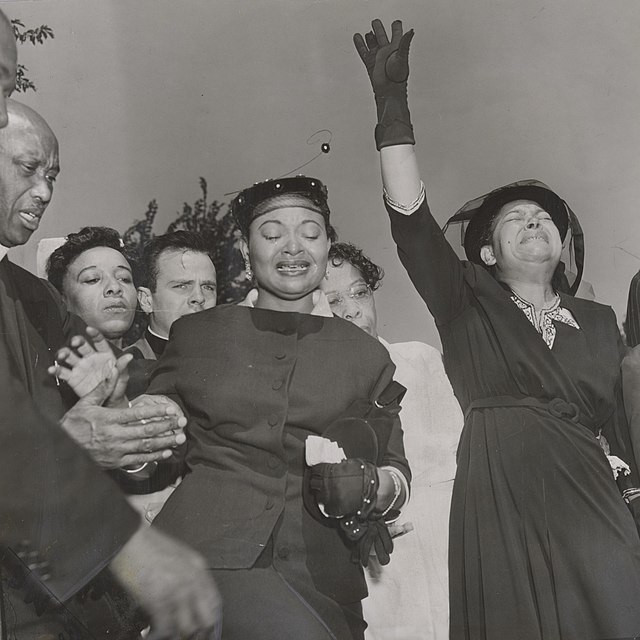
The death of Emmett Till became a galvanizing moment for the civil rights movement. His mother, Mamie Till-Mobley, made the courageous decision to hold an open-casket funeral, allowing the world to see the horrific brutality inflicted on her son. Photographs of Till’s mutilated body, published in Jet magazine and other outlets, shocked the conscience of the nation and brought attention to the pervasive violence of racism in America.
Till’s murder inspired activists like Rosa Parks and Martin Luther King Jr., who referenced his death as a turning point in the fight for racial equality. In 2022, President Joe Biden signed the Emmett Till Antilynching Act into law, making lynching a federal hate crime. While these milestones highlight progress, they also underscore the enduring legacy of systemic racism that enabled Till’s murder and shielded Carolyn Bryant from accountability.
Carolyn Bryant Donham’s Death and Historical Reckoning
Carolyn Bryant Donham died in 2023 at the age of 88, escaping legal consequences for her role in one of the most infamous crimes in American history. Her death reignited debates about accountability, justice, and the long shadow of racial violence in the United States.
Some argue that Donham’s actions symbolize the dangers of unchecked prejudice and the devastating consequences of lies weaponized by racism. Others view her as a reminder of the countless perpetrators of racial violence who were never held accountable, reflecting a justice system that has historically failed Black Americans.
Lessons from a Tragic History
The story of Carolyn Bryant Donham and Emmett Till is a haunting reminder of the consequences of racial hatred and the importance of confronting historical injustices. It highlights the need for accountability, not just for individuals but for the systems that perpetuate inequality and violence. Till’s legacy serves as a call to action, urging society to continue the fight against racism and to ensure that such atrocities are never repeated.
In the end, Carolyn Bryant Donham’s life and actions stand as a cautionary tale about the destructive power of lies and the lasting impact of injustice. Emmett Till’s story, however, remains a beacon for change, a testament to the resilience of those who fight for equality, and a reminder that the pursuit of justice must never waver.



