
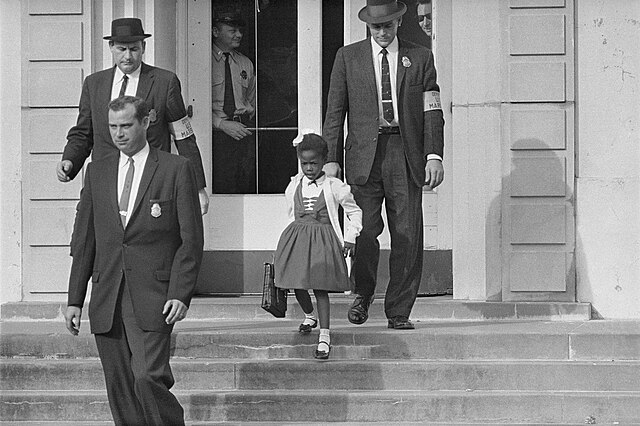
Ruby Bridges is an iconic figure in the history of civil rights in America. Born on September 8, 1954, in Tylertown, Mississippi, Ruby became, at six years old, the first African American child to integrate an all-white elementary school in the South. Her courageous walk, escorted by federal marshals through an angry mob at William Frantz Elementary School in New Orleans, Louisiana, on November 14, 1960, became a defining moment in the struggle for racial equality and a powerful symbol of the Civil Rights Movement.
Early Life and Background
Ruby Bridges was born during a time of deep racial segregation in the American South. Her parents, Abon and Lucille Bridges, moved the family to New Orleans in search of better work opportunities. Little did they know that their daughter Ruby would soon become a national icon for integration. The opportunity for Ruby to attend an all-white school came after a 1954 ruling by the U.S. Supreme Court in the case of Brown v. Board of Education that declared state laws establishing separate public schools for black and white students unconstitutional.
The Historic Walk
In 1960, Ruby was one of six black children in New Orleans to pass a test that determined whether or not the black children would go to the all-white school. However, she was the only one to attend William Frantz Elementary. On her first day, as Ruby walked into the school, crowds of people shouted and threw objects at her. The image of this small black girl, clad in a pretty dress, walking stoically between towering marshals, became an enduring image in the annals of American history, captured in Norman Rockwell’s painting “The Problem We All Live With.”
Inside the School Walls
Once inside the school, Ruby was placed in a class with Barbara Henry, a teacher from Boston, Massachusetts, who was the only one willing to teach Ruby. She spent her entire first year as the only student in Henry’s class because parents pulled or kept their children out of school rather than let them be in the same class as a black student. Despite this, Ruby never missed a day of school that year.
Impact and Legacy
Ruby’s experience was not just a personal challenge but also a significant event in the Civil Rights Movement. It highlighted the deep-rooted segregation and racism that African Americans faced and the federal government’s role in enforcing school integration. Ruby’s bravery paved the way for continued efforts to achieve equality in schooling, and her story has been a source of motivation for many across the globe.
Her ordeal didn’t end after her first year at William Frantz Elementary. As she grew older, Ruby continued to face challenges and discrimination, but her resolve never waned. She later graduated from a desegregated high school, became a travel agent, married, and had four sons.
Later Years and Continued Activism
Ruby Bridges has not let her historic role fade into the background. Instead, she has embraced it, becoming an active spokesperson for racial equality and the power of education. In 1999, she established The Ruby Bridges Foundation to promote tolerance and change through education. She is also a public speaker and author, having written several books, including a children’s book titled “Through My Eyes,” which details her experiences during school integration.
Ruby’s life is a testament to the power of courage and perseverance in the face of overwhelming adversity. Her actions not only changed the course of her life but also touched the lives of countless others who followed in her footsteps. Her story continues to teach lessons of empathy, equality, and the importance of standing up for one’s rights.
Final Thoughts
Ruby Bridges remains a potent symbol of civil rights and the fight against segregation. By walking into an all-white school, Ruby stepped into the pages of history and became a pivotal figure in the transformation of American society. Her courage as a six-year-old child reminds us that change is possible and that everyone, regardless of age, has the power to impact the world. Today, Ruby Bridges continues to inspire generations to fight racism and champion the cause for equal rights for all.



