
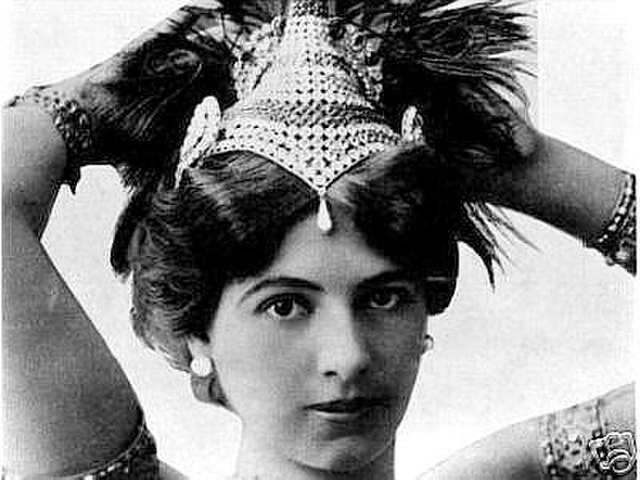
Mata Hari is a name that conjures images of mystery, seduction, and intrigue, emblematic of the complex roles she played as a dancer, courtesan, and alleged spy during World War I. Born Margaretha Geertruida Zelle in 1876 in Leeuwarden, Netherlands, her transformation into Mata Hari marked her as an international icon whose dramatic life and death sparked endless fascination and debate. This blog post delves deep into her life story, examining her evolution from an ordinary Dutch woman to a symbol of exoticism and espionage, culminating in her controversial execution.
Early Life and Personal Struggles
Margaretha Zelle’s journey into infamy began far from the world of espionage, in a small Dutch town where she was born to a hat maker and his wife. Her childhood was relatively uneventful until her family faced bankruptcy when her father abandoned them, a pivotal moment that significantly altered her life trajectory. Seeking stability, she married Rudolf MacLeod, a Dutch Colonial Army officer, and moved to Java, now Indonesia. This marriage, though initially seeming like a respite, soon deteriorated due to MacLeod’s abusive behavior and alcoholism, leading to their eventual separation. The demise of her marriage marked her first major transformation, setting the stage for her later persona as Mata Hari.
Paris: Birth of Mata Hari
In 1903, after her return to Europe, Margaretha moved to Paris, reinventing herself as Mata Hari, a supposed Javanese princess skilled in the art of sacred Indian dance. Her performances capitalized on the exotic fantasies of the European elite, blending elements of cultural appropriation with imaginative storytelling to create a compelling stage persona that was mysterious and alluring. She quickly rose to fame, her name becoming synonymous with exoticism and sensuality. Her choice of scant attire and suggestive movements earned both admiration and infamy, embedding her image in the public consciousness as a symbol of feminine mystique and sexual liberation.
Espionage Activities and World War I
As World War I unfolded, Mata Hari’s constant travels across Europe drew suspicion. By 1916, Europe was a hotbed of espionage and counterespionage activities, and Mata Hari’s lifestyle and liaisons with military officers from various countries made her a prime target for suspicion. She was arrested and accused of spying for Germany, with authorities alleging that her liaisons were not just romantic or financial but were a cover for significant espionage activities. The evidence, largely circumstantial and bolstered by her own unwise admissions, led to her conviction. The trial was quick, and many later criticized it for its lack of concrete evidence and reliance on prevalent anti-foreigner sentiments.
Execution and Its Aftermath
Mata Hari was executed by firing squad on October 15, 1917, at the age of 41. Her death did not quell the fascination with her life; instead, it amplified her mythos, casting her as a martyr in some narratives and a villain in others. In the decades following her execution, Mata Hari’s life has been the subject of numerous books, films, and documentaries, each interpreting her actions and motives through various lenses of bias and speculation.
Reflecting on Mata Hari’s Legacy
Today, Mata Hari is often seen as a victim of a moral panic about female sexuality and independence, with some historians arguing that she was scapegoated by a French government desperate to distract from war failures. Her story is frequently revisited for themes of gender, power, and scapegoating, which resonate in the contemporary discussions about women’s autonomy and moral judgments in times of political and social crises.
Her legacy serves as a poignant reminder of the complexities surrounding women who defy social expectations and the dangerous intersections of war, espionage, and sexuality. Mata Hari remains a compelling figure in the narrative of World War I and continues to intrigue and provoke debate about the roles and representations of women in history.
Final Thoughts
Mata Hari’s story, woven with threads of tragedy, defiance, and intrigue, highlights the pervasive allure of a woman who navigated, and ultimately fell victim to, the treacherous currents of early twentieth-century geopolitics. Her life as a dancer, courtesan, and alleged spy offers a fascinating case study of the intersections between gender, war, and espionage. More than a century after her death, the legend of Mata Hari continues to captivate those interested in the shadows and lights of historical figures whose lives defy simple categorization.



