
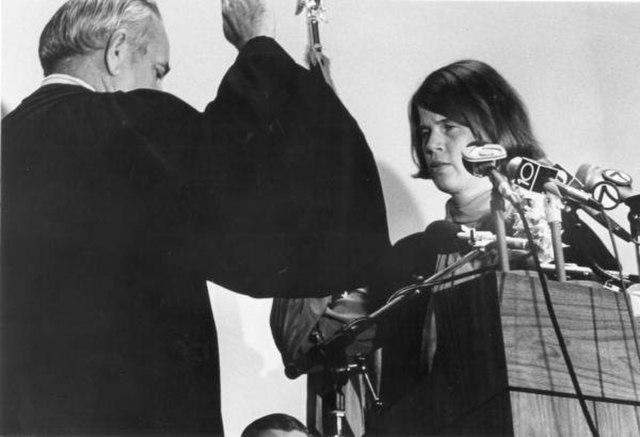
Janet Reno, the first woman to serve as the U.S. Attorney General, remains one of the most fascinating figures in American political history. Appointed by President Bill Clinton in 1993, Reno served until 2001, making her the second-longest-serving Attorney General in the 20th century. Her tenure was marked by a series of high-profile cases and decisions that shaped national policy and left a lasting impact on the justice system. This blog post delves into Reno’s early life, her groundbreaking career, and her enduring legacy.
Early Life and Education
Janet Reno was born on July 21, 1938, in Miami, Florida. Her mother was a journalist, and her father was a police reporter. Reno grew up in a house built by her mother on the edge of the Everglades, a unique upbringing that instilled in her a love for the Florida wilderness that lasted throughout her life. Reno attended Cornell University for her undergraduate degree in chemistry, reflecting her initial interest in science before turning to law. She later attended Harvard Law School, one of the few women in her class, where she earned her LL.B. degree in 1963.
First Female to Lead a County Prosecutor’s Office in Florida
From 1963 to 1967, Janet Reno worked as an associate at Brigham & Brigham. In 1967, she advanced to become a partner at Lewis & Reno, where she stayed until 1971. That year, she took on the role of staff director for the Judicial Committee of the Florida House of Representatives. In early 1973, Reno served as a consultant to the Florida State Senate’s Criminal Justice Committee for the revision of Florida’s Criminal Code. Following this, from 1973 to 1976, she was the administrative assistant to the State Attorney of the 11th Judicial Circuit in Florida (Miami). Reno then returned to private practice as a partner at Steel, Hector & Davis in Miami, where she remained until 1978. That year, the Governor of Florida appointed her as the State Attorney for Miami, marking her as the first woman to hold this top prosecutorial role. She held this position until 1993 when President Clinton appointed her as the U.S. Attorney General.
First Female U.S. Attorney General
Janet Reno’s appointment as the Attorney General marked the first time a woman had held the post, and she approached her new role with a focus on integrity and independence. Her tenure was not without controversy; she authorized the 51-day standoff at Waco, Texas, against the Branch Davidians, which resulted in a tragic fire and the deaths of 76 people. She faced intense criticism and scrutiny for her decision but maintained that the responsibility was hers alone, showing her willingness to stand by her principles even in the face of adversity.
Reno also enforced new policies that shaped the Justice Department, including the implementation of the Violence Against Women Act and the initiation of the “COPS” program, which facilitated community policing. On technology, Reno tackled antitrust issues, most notably leading the charge against Microsoft in a case that would set precedents for future tech regulation.
Her tenure also saw significant advancements in addressing terrorism, laying the groundwork for the justice department’s actions in a post-9/11 era. Following the 1995 Oklahoma City Bombing, Reno’s management of the crisis and subsequent prosecution of Timothy McVeigh demonstrated her capacity to handle national security issues with a steady hand.
Post-Attorney General Life
After leaving office in 2001, Reno returned to Florida and stayed active, running for Governor of Florida in 2002. Although she did not win, her campaign was a testament to her unyielding dedication to public service. Reno continued to engage with legal and political issues, particularly focusing on reforming the juvenile justice system and advocating for the rights of children.
Legacy and Impact
Janet Reno’s legacy is multifaceted. As the first female Attorney General, she broke through the glass ceiling in one of the highest offices in the U.S. legal framework. Her straightforward, no-nonsense approach to law and order, her willingness to accept responsibility for her actions, and her staunch defense of the Justice Department’s independence marked her tenure. Reno was often criticized, sometimes vehemently, but she remained committed to her principles, prioritizing the rule of law above politics.
She was also instrumental in bringing attention to children’s rights and the importance of educational and rehabilitative initiatives within the juvenile justice system. Her approach has influenced how juvenile offenders are treated to this day.
Reno was known for her integrity, intellectual rigor, and the courage to make tough decisions. Her impact on American justice and her trailblazing role for women in government continue to resonate. Janet Reno passed away on November 7, 2016, but her formidable presence in American law and her contributions to public service are remembered as vital parts of her substantial legacy.



