
Marie Kondo, a tidying expert, author, and cultural phenomenon, has revolutionized the way people think about organizing their homes and lives. Her philosophy extends beyond mere cleaning—encouraging a fundamental reevaluation of what we choose to own and why. This blog post explores Marie Kondo’s backstory, her unique tidying philosophy, and how she became a global sensation.
The Backstory of Marie Kondo
Born in Tokyo, Japan, Marie Kondo was drawn to organization from a young age. By the time she was a teenager, Kondo was already offering tidying advice to her friends. Her fascination with organization led her to read numerous magazines and books on the subject, eventually developing her own method of decluttering, which would later become known internationally as the KonMari Method.
Kondo’s breakthrough came while she was a sociology student at Tokyo Woman’s Christian University, where she wrote her thesis on the art of tidying. She started her consulting business as a 19-year-old student, helping clients transform their cluttered spaces into serene environments. Her waiting list grew quickly, signaling the high demand for her unique skills.
The Philosophy of Tidying Up
Marie Kondo’s tidying philosophy centers on the idea of keeping only those things that “spark joy.” This criterion goes beyond practical utility to touch on the emotional relationship people have with their possessions. Her method is a radical departure from most traditional approaches to decluttering, which focus on eliminating excess rather than cherishing what truly brings happiness.
The KonMari Method advocates for a category-by-category system rather than room-by-room. The categories are as follows: clothing, books, papers, komono (miscellaneous items), and, finally, sentimental items. By tackling categories in this specific order, individuals can hone their decision-making processes, making it easier to decide what stays and what goes.
Kondo’s Rise to Global Fame
Marie Kondo first shared her tidying philosophy with a wider audience in her best-selling book, “The Life-Changing Magic of Tidying Up,” published in Japan in 2011 and translated into English in 2014. The book became a global sensation, selling millions of copies and being translated into multiple languages. It tapped into the universal desire for simpler, more organized living amidst the modern world’s chaos and clutter.
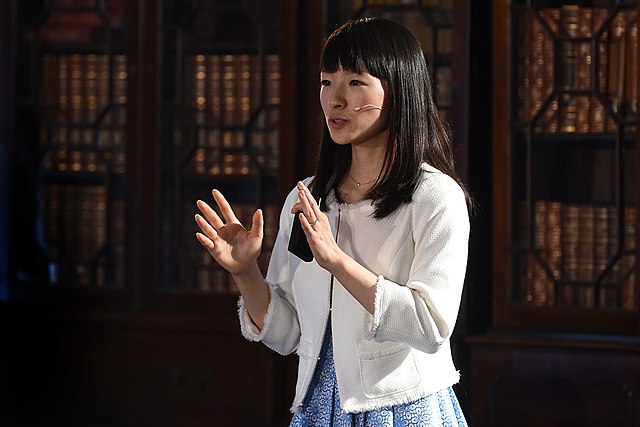
The book’s success led to Kondo being invited to speak at numerous events, where she further outlined her method and philosophy, helping to solidify her status as a global organizing guru. Her approach appealed not only because of its effectiveness but also for its gentle philosophy of finding joy in one’s surroundings.
Media Presence and Influence
Marie Kondo’s influence expanded exponentially with the release of her Netflix series, “Tidying Up with Marie Kondo,” in 2019. The series showcased real people applying the KonMari Method in their homes, which not only increased the visibility of Kondo’s method but also made her a household name. Viewers were captivated by her calming presence and the genuine emotional catharsis experienced by participants in the show.
Aside from her TV show and books, Kondo has also launched a line of products designed to complement her tidying method, from storage boxes to essential oils, further embedding her philosophy into everyday life practices. Moreover, she has developed a consultant training program, certifying others to teach her method and spread its impact globally.
Critiques and Cultural Impact
While Marie Kondo’s method has been largely celebrated, it has also faced criticism. Some detractors argue that her approach is too rigid and culturally specific, potentially clashing with Western habits of consumption and lifestyle. However, many find that the KonMari Method’s focus on joy and mindfulness offers a refreshing take on consumption and materialism in any cultural context.
Kondo’s work has contributed to a broader conversation about the ways our physical spaces affect our mental health and well-being. The minimalism trend, although not started by Kondo, certainly gained momentum through her influence, encouraging more people to embrace simplicity and intentionality in their living spaces.
Final Thoughts
Marie Kondo has transformed tidying from a mundane chore to an introspective journey that challenges individuals to reassess their needs and desires. Her philosophy extends beyond cleaning up spaces; it is about cultivating a lifestyle that emphasizes happiness and mindfulness. As we continue to navigate a world that often feels overwhelmingly complex, Marie Kondo’s teachings offer a path to clarity and peace through the simple act of choosing joy.



