


“Rosie the Riveter” is one of the most iconic images in American history. The strong, determined woman in a red polka-dot bandana flexing her arm has become a symbol of female empowerment and the vital role women played in the workforce during World War II. For decades, many believed that “Rosie” was just a composite figure representing millions of women who took on factory jobs while men were at war. However, the real woman behind the famous image was Naomi Parker Fraley—a humble, hardworking woman whose legacy was uncovered later in life.
This blog post explores the life of Naomi Parker Fraley, the real woman who inspired “Rosie the Riveter,” and how her story reflects the resilience, strength, and determination of the countless women who contributed to the war effort.
The Rise of “Rosie the Riveter”
During World War II, the U.S. faced a shortage of male workers as millions of men were sent overseas to fight. To fill the gap, women stepped into roles traditionally held by men, taking jobs in factories, shipyards, and other industries vital to the war effort. These women were known as “Rosies,” and they worked tirelessly building airplanes, munitions, and other supplies needed for the war.
In 1942, Westinghouse Electric produced a series of motivational posters designed to boost worker morale. Among them was the now-famous image of a woman rolling up her sleeves with the slogan, “We Can Do It!” This image would later become synonymous with “Rosie the Riveter,” a fictional character representing the strength and contributions of women in the workforce.
However, for many years, the identity of the real woman who inspired the poster remained a mystery.
Naomi Parker Fraley: The Real “Rosie”
Naomi Parker Fraley was born in Tulsa, Oklahoma, in 1921, and later moved to California with her family. During World War II, Naomi worked at the Naval Air Station in Alameda, California, where she was one of the many women who answered the call to work in defense factories.
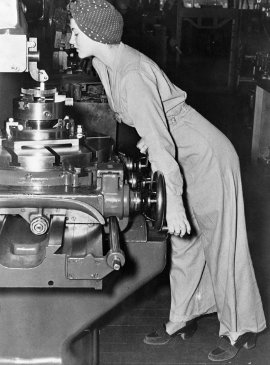
In 1942, Naomi was photographed while working on a turret lathe in the machine shop at the air station. The photograph shows her dressed in overalls, her hair tied back in a red polka-dot bandana—the same look that would later be immortalized in the “We Can Do It!” poster. This photograph, taken by a photographer from Acme News Pictures, was widely circulated in newspapers and publications, celebrating the contributions of female factory workers.
For decades, Naomi’s identity as the real-life inspiration for “Rosie the Riveter” remained largely unknown. In fact, another woman, Geraldine Hoff Doyle, was mistakenly believed to be the model for the poster. It wasn’t until 2016, after extensive research by Dr. James J. Kimble, a Seton Hall University professor, that Naomi Parker Fraley was correctly identified as the real woman behind the image.
Rediscovering Naomi’s Legacy
For most of her life, Naomi Parker Fraley had no idea that her image had become an iconic part of American history. It wasn’t until the 2010s, when she saw the famous poster in a museum exhibit, that she recognized the photo of herself and realized her connection to the legendary “Rosie the Riveter.”
After being identified as the real “Rosie,” Naomi received the recognition she deserved. She became a symbol of the unsung heroes of World War II—the women who took on challenging and essential roles in factories across the country, proving that they could do the same work as men and contribute to the nation’s success.
Naomi’s humble nature and quiet dignity made her reluctant to seek the spotlight. In an interview after her discovery, she remarked, “The women of this country these days need some icons. If they think I’m one, I’m happy about that.”
The Legacy of “Rosie the Riveter” and Naomi Parker Fraley
“Rosie the Riveter” has evolved far beyond her World War II origins. Today, she is a symbol of female empowerment, equality, and resilience. The image continues to inspire women around the world to break down barriers, take on challenges, and pursue careers in fields traditionally dominated by men.
Naomi Parker Fraley’s story highlights the often-overlooked contributions of women throughout history. During the war, millions of women like Naomi stepped up, filled critical roles, and kept the country running while their husbands, brothers, and sons fought abroad. Their contributions not only helped win the war but also paved the way for future generations of women to enter the workforce and demand equal rights and opportunities.
In 2018, at the age of 96, Naomi Parker Fraley passed away. While she may not have sought recognition during her lifetime, her legacy as the real “Rosie the Riveter” continues to inspire and empower women across the globe.
Final Thoughts: Celebrating the Real “Rosie”
Naomi Parker Fraley’s life and legacy serve as a reminder of the incredible contributions made by women during World War II. Though she remained unknown for many years, her story now stands as a testament to the strength and resilience of the women who helped shape American history.
As we continue to celebrate “Rosie the Riveter” as a symbol of female empowerment, it’s important to remember the real woman behind the image—Naomi Parker Fraley—whose dedication and determination are an enduring source of inspiration.



