
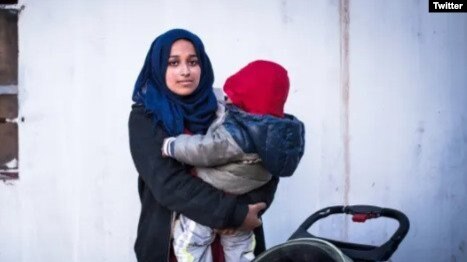
Hoda Muthana’s name made international headlines in 2019, sparking intense debate and controversy in the United States and beyond. Once a seemingly ordinary young woman from Alabama, Muthana left her home in 2014 to join the Islamic State (ISIS) in Syria. Her story, however, took an unexpected turn when, after years of living under ISIS rule, she expressed a desire to return to the U.S. What followed was a legal and political battle that raised profound questions about citizenship, national security, and the rehabilitation of those who join extremist groups. This blog post delves into the complex case of Hoda Muthana and the broader implications it has for society today.
The Journey to Extremism: Hoda Muthana’s Path to ISIS
Hoda Muthana was born in 1994 in New Jersey to Yemeni immigrants and was raised in Hoover, Alabama, a suburb of Birmingham. By all accounts, Muthana grew up like many American teenagers—attending high school, making friends, and spending time on social media. However, her life took a dramatic turn in 2014 when, at the age of 20, she left the United States and traveled to Syria to join ISIS, one of the most notorious and violent extremist groups in the world.
According to Muthana, her path to radicalization began online, where she was exposed to extremist ideologies and propaganda. Feeling isolated and searching for a sense of belonging, she was drawn into a world that promised purpose and meaning. In November 2014, Muthana used her college tuition money to purchase a plane ticket and flew from Alabama to Turkey, eventually crossing the border into Syria to join ISIS.
Once in Syria, Muthana became known as one of the so-called “ISIS brides,” women who traveled to the Islamic State-controlled territories to marry fighters and contribute to the group’s goals. Through her Twitter account, she became a vocal advocate for ISIS, calling for attacks on Western countries and spreading extremist propaganda. Her posts were filled with hatred and violence, urging followers to engage in acts of terror against Americans and other perceived enemies.
Life in ISIS Territory: Marriage, Loss, and Disillusionment
During her time with ISIS, Muthana married three ISIS fighters, each of whom was eventually killed in combat. She gave birth to a son in 2017 and found herself living under increasingly dire conditions as ISIS lost territory and resources. As the so-called caliphate crumbled, Muthana’s view of the group began to change. She claimed to have become disillusioned with the brutality and hypocrisy of the group and expressed regret for her actions.
In early 2019, Muthana fled the last remaining ISIS stronghold in Syria and surrendered to Kurdish forces. From a refugee camp in northern Syria, she gave several interviews in which she expressed a desire to return to the United States, saying she regretted her decision to join ISIS and wanted a second chance to live a normal life with her son.
The Controversy: Citizenship and National Security Concerns
Muthana’s plea to return to the U.S. ignited a firestorm of controversy. Many Americans were shocked and outraged, arguing that she had forfeited her right to return by willingly joining a terrorist organization and advocating for violence against her home country. Questions about national security and the potential risks associated with allowing someone who had been radicalized to re-enter the U.S. were hotly debated in the media and political circles.
The U.S. government, under the Trump administration, swiftly denied Muthana’s request to return, claiming she was not a U.S. citizen. The State Department argued that Muthana was born while her father, a former Yemeni diplomat, still held diplomatic status, meaning she was not entitled to birthright citizenship. However, Muthana’s legal team and family argued that her father’s diplomatic status had ended before her birth, making her a U.S. citizen by right.
The case quickly moved to the courts, with Muthana’s family filing a lawsuit to challenge the government’s decision. Her father, Ahmed Ali Muthana, sought to have her and her young son repatriated, arguing that she should face any legal consequences for her actions in the United States. However, in 2019, a federal judge ruled that Muthana was not a U.S. citizen and therefore had no right to return to the country, a decision that effectively left her stateless and stranded in Syria.
Muthana’s Future: What Happens Next?
As of now, Hoda Muthana remains in a refugee camp in Syria, living in a state of limbo with her young son. She continues to express regret for her actions and has stated in various interviews that she was manipulated and brainwashed by ISIS propaganda, insisting that she no longer holds extremist views and wants to rehabilitate herself and start anew in the United States.
Her case raises several complex questions about national security, citizenship rights, and the responsibilities of nations in handling individuals who defected to join extremist groups. Should those who willingly joined terrorist organizations be allowed to return to their countries of origin, and if so, under what conditions? Is there room for redemption, rehabilitation, and reintegration, or is the risk too great?
These questions are particularly challenging in the case of Muthana, whose legal status remains disputed and whose actions have left a deep impact on public opinion.
The Broader Implications: Security, Citizenship, and Redemption
Hoda Muthana’s story is a stark reminder of the far-reaching consequences of radicalization and the power of online propaganda in recruiting young people into extremist movements. Her case also illustrates the legal and moral complexities involved in determining who is responsible for individuals who have joined terrorist groups and how best to handle their requests to return home.
For many, Muthana’s case highlights the need for clearer policies regarding citizens who join foreign terrorist organizations and the potential threat they may pose upon their return. For others, it raises concerns about due process, human rights, and the possibility of second chances, particularly when young people make misguided decisions.
Muthana’s situation also serves as a wake-up call for societies to do more to prevent radicalization, particularly among vulnerable young people who may feel alienated or marginalized. The fight against extremism must go beyond the battlefield to include education, community engagement, and online monitoring to combat the spread of extremist ideologies.
Final Thoughts: A Complicated Path Forward
Hoda Muthana’s story is a complex and controversial one, filled with questions that have no easy answers. As she remains in limbo in a Syrian refugee camp, her case continues to challenge our understanding of justice, security, and the potential for rehabilitation. It serves as a reminder that the choices we make have consequences, but it also prompts us to think about the capacity for change and redemption in the most unlikely of circumstances.
Whether or not Hoda Muthana will ever return to the United States remains uncertain. What is clear, however, is that her case will continue to spark debate and serve as a crucial test of how nations deal with the challenging issue of returning foreign fighters and their families in the years to come.



