
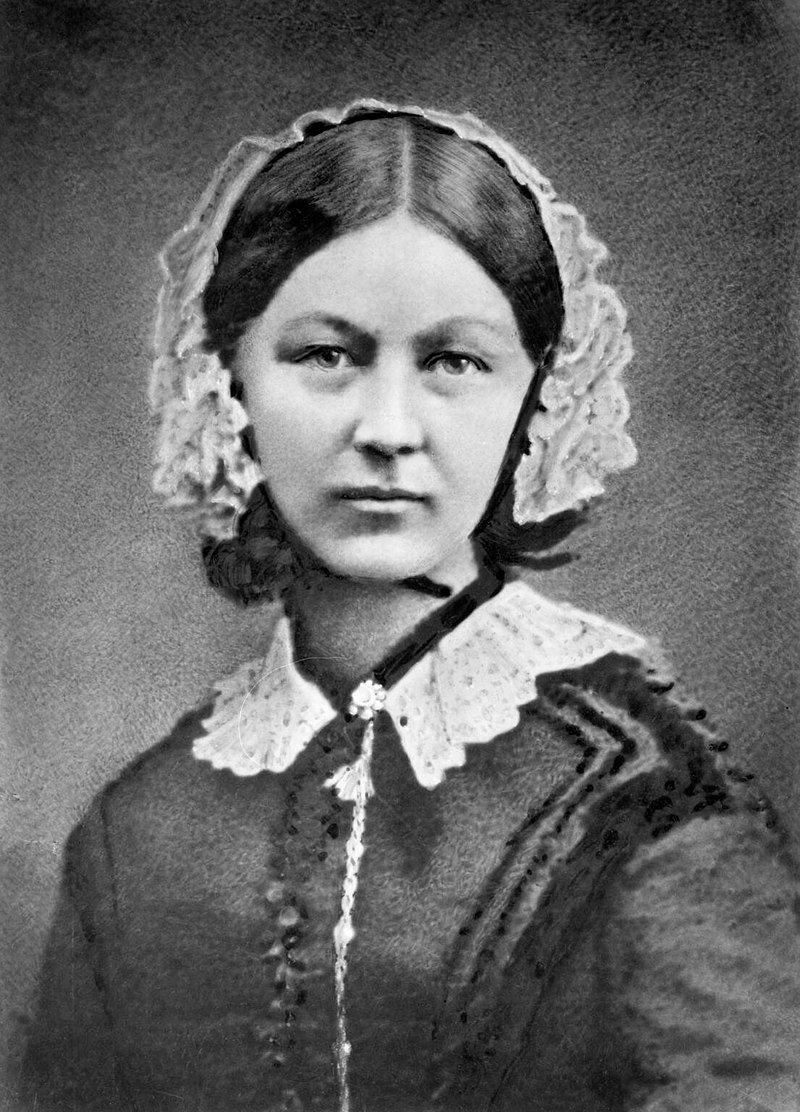


Florence Nightingale, often referred to as “The Lady with the Lamp,” revolutionized the field of nursing and left a profound impact on healthcare as we know it today. Born on May 12, 1820, in Florence, Italy, Nightingale’s commitment to improving patient care, advocating for public health reforms, and professionalizing nursing transformed a vocation that was once seen as menial labor into a respected, vital profession. Her pioneering work during the Crimean War and her continued advocacy for sanitation and education made her a global icon, celebrated for her compassion, intelligence, and dedication.
Early Life and Calling to Nursing
Florence Nightingale was born into a wealthy British family that valued education and philanthropy. Despite the social expectations of her time, which dictated that women of her standing should focus on marriage and domestic duties, Nightingale felt a higher calling. From a young age, she was determined to pursue nursing—a decision that was met with resistance from her family and society, who viewed nursing as an unsuitable career for a woman of her class.
Driven by a sense of divine purpose, Nightingale defied societal norms and began her training in nursing at a hospital in Germany in 1850. She quickly distinguished herself with her organizational skills, scientific approach, and compassionate care for patients. Her determination to serve those in need only grew stronger, leading her to a pivotal moment that would define her legacy.
The Crimean War: A Turning Point
In 1854, Florence Nightingale’s career took a significant turn when she was asked to lead a group of 38 nurses to care for British soldiers wounded in the Crimean War. The conditions they encountered at the British base hospital in Scutari (modern-day Üsküdar, Turkey) were appalling. The hospital was overcrowded, unsanitary, and lacked basic supplies. Soldiers were dying more from infections and poor hygiene than from their battle wounds.
Nightingale immediately set to work, implementing strict sanitation practices, improving ventilation, and organizing proper food and medical supplies. She tirelessly worked long hours, often seen making her rounds with a lamp in hand to check on patients at night—a practice that earned her the nickname “The Lady with the Lamp.” Her efforts drastically reduced the death rate at the hospital, from 42% to just 2%, demonstrating the critical importance of hygiene and patient care.
Pioneering Reforms in Healthcare
Florence Nightingale’s experiences during the Crimean War solidified her belief in the necessity of reforming healthcare and nursing practices. Upon her return to England, she used her fame and influence to advocate for change. In 1859, she published “Notes on Nursing: What It Is and What It Is Not,” a groundbreaking book that provided guidelines for proper patient care, hygiene, and hospital management. This book is still considered a classic in the field of nursing.
In 1860, she established the Nightingale Training School for Nurses at St. Thomas’ Hospital in London, the first secular nursing school in the world. Her training methods emphasized rigorous education and professional standards, elevating nursing from a disrespected occupation to a recognized profession. Graduates of her school spread her methods worldwide, fundamentally transforming healthcare practices across the globe.
Championing Public Health and Data Science
Beyond nursing, Nightingale was a trailblazer in public health and statistical analysis. She was a pioneer in using data to advocate for healthcare reforms, employing statistical methods to present her findings on sanitation and patient mortality. She famously used a form of the pie chart, known as the “coxcomb,” to visually illustrate the impact of poor sanitation on soldier mortality, compelling policymakers to take action.
Nightingale’s work extended to broader public health reforms, including improvements in sanitation, hospital design, and patient care standards. She was a strong advocate for clean water, proper sewage systems, and better living conditions in hospitals and homes, recognizing that these factors were essential to preventing illness and promoting health.
Legacy and Lasting Impact
Florence Nightingale’s legacy endures today as the founder of modern nursing and a pioneer of healthcare reform. Her emphasis on sanitation, patient care, and the professional training of nurses transformed nursing into a respected and essential component of healthcare. The principles she championed laid the foundation for the standards and practices still used in hospitals worldwide.
Her commitment to data-driven advocacy and her use of statistics to influence policy remain influential, underscoring the importance of evidence-based decision-making in public health. Every year, on her birthday, May 12th, the world celebrates International Nurses Day in her honor, recognizing the invaluable contributions of nurses and their critical role in healthcare.
Final Thoughts: An Inspirational Figure
Florence Nightingale was far more than just “The Lady with the Lamp.” She was a visionary, a reformer, and a fierce advocate for the sick and vulnerable. Her tireless work and innovative thinking not only saved countless lives during the Crimean War but also established a legacy of compassion, professionalism, and excellence in nursing that continues to inspire and guide healthcare professionals today.
Through her unwavering dedication, Florence Nightingale proved that one person could make a profound difference, leaving a lasting impact on the world and setting the standard for what it means to be a nurse. Her story is a powerful reminder of the importance of compassion, education, and relentless pursuit of betterment in the face of adversity.





