
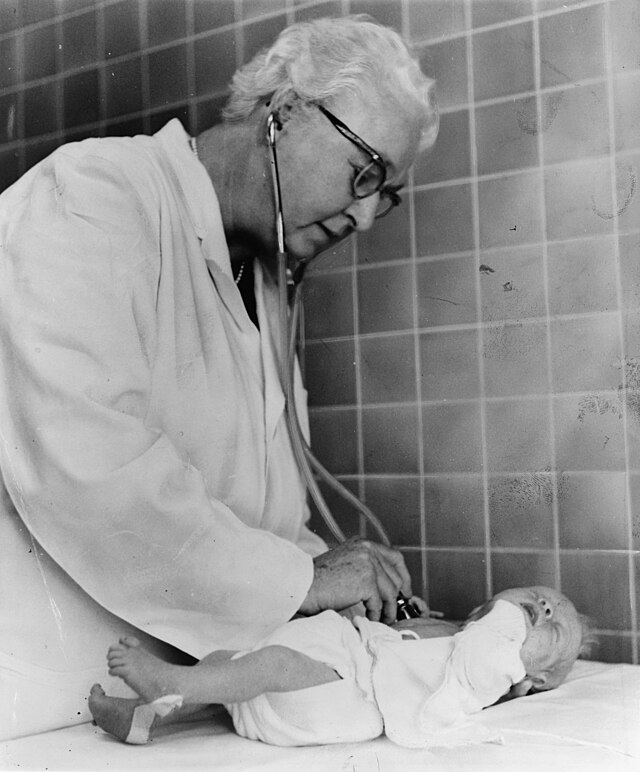


Every year, millions of babies around the world are born into the care of doctors and nurses who work diligently to ensure their safe arrival into the world. One of the most critical moments in a newborn’s life is the first few minutes after birth, where swift medical assessments can make all the difference in their health outcomes. A vital tool used in these assessments is the Apgar score, a simple yet revolutionary method that has saved countless newborn lives since its inception. But how did the Apgar score come about, and who was behind this groundbreaking development? This blog post explores the history of the Apgar score, its creation, and its profound impact on modern neonatal care.
Who Was Virginia Apgar?
The Apgar score was developed by Dr. Virginia Apgar, an American anesthesiologist, whose work transformed neonatal care in the 20th century. Born in 1909 in Westfield, New Jersey, Apgar was a bright and ambitious young woman with a passion for medicine. She graduated from Mount Holyoke College in 1929 and went on to Columbia University College of Physicians and Surgeons, where she received her medical degree in 1933.
Initially, Apgar pursued a career in surgery but switched to anesthesiology, a field that was still developing at the time. She became one of the first women in her specialty and went on to become a leading figure in the field of obstetric anesthesia. Her experiences during childbirth procedures, particularly those involving newborns who needed immediate medical attention, led her to develop an interest in improving outcomes for infants in the crucial moments after birth.
The Birth of the Apgar Score
In the 1950s, Dr. Virginia Apgar began to notice a gap in neonatal care. At that time, there was no standardized method for assessing a newborn’s condition immediately after birth. Doctors and nurses often relied on their judgment and experience to determine whether an infant required urgent medical attention. Unfortunately, this lack of consistency led to missed signs of distress, which could have severe consequences for the baby’s health and survival.
To address this issue, Apgar developed a simple, systematic method for evaluating a newborn’s health within the first few minutes of life. In 1952, she introduced the Apgar score, a quick and easy-to-use scoring system that allowed healthcare providers to assess a newborn’s vital signs and determine whether immediate medical intervention was necessary.
How the Apgar Score Works
The Apgar score evaluates a newborn on five critical criteria: Appearance (skin color), Pulse (heart rate), Grimace response (reflexes), Activity (muscle tone), and Respiration (breathing effort). Each of these criteria is scored on a scale of 0 to 2, with a maximum total score of 10. The scoring is typically performed at one minute and five minutes after birth, providing an immediate assessment of the infant’s health and helping medical professionals make quick decisions about necessary care.
Here’s a breakdown of how the Apgar score is calculated:
- Appearance (Skin Color)
- 0: Blue or pale all over
- 1: Body pink, extremities blue
- 2: Completely pink
- Pulse (Heart Rate)
- 0: No heartbeat
- 1: Fewer than 100 beats per minute
- 2: At least 100 beats per minute
- Grimace Response (Reflex Irritability)
- 0: No response to stimulation
- 1: Grimace or weak cry when stimulated
- 2: Active, prompt response to stimulation
- Activity (Muscle Tone)
- 0: Limp and floppy
- 1: Some flexion of arms and legs
- 2: Active movement
- Respiration (Breathing Effort)
- 0: Not breathing
- 1: Weak or irregular breathing
- 2: Strong, robust crying
A total Apgar score of 7 to 10 is generally considered normal, while a score below 7 indicates that the baby might need medical intervention or closer monitoring. Scores are reassessed at five minutes and sometimes at ten minutes, depending on the baby’s condition.
Impact and Significance of the Apgar Score
The introduction of the Apgar score revolutionized neonatal care by providing a standardized, easy-to-use tool that could be used by healthcare professionals worldwide. It quickly became a routine part of childbirth practices and has remained so ever since. The Apgar score allows for rapid identification of newborns in distress, ensuring they receive the appropriate medical care and support as quickly as possible.
This innovation has contributed significantly to reducing neonatal mortality and morbidity, particularly in the critical moments following birth. By giving healthcare providers a clear, objective method for assessing newborn health, the Apgar score has helped save countless lives and improve the outcomes for infants who may otherwise have been at risk.
A Lasting Legacy
Dr. Virginia Apgar’s contribution to medicine extended far beyond the development of her eponymous scoring system. She was also a passionate advocate for maternal and infant health, focusing her career on improving outcomes for mothers and babies alike. She worked for the March of Dimes, where she led research on the prevention of birth defects and congenital disabilities, further cementing her legacy as a pioneer in maternal-fetal medicine.
Apgar’s work and dedication to improving newborn care earned her numerous accolades, including being the first woman to become a full professor at the Columbia University College of Physicians and Surgeons. Her name has become synonymous with the first vital assessment of life, and her scoring system is used globally in hospitals to this day.
Celebrating Dr. Virginia Apgar’s Contribution to Neonatal Care:
The Apgar score is a shining example of how a simple idea can have a profound impact on healthcare practices and outcomes. Through her innovative thinking and commitment to improving newborn care, Dr. Virginia Apgar created a tool that has saved countless lives and remains a cornerstone of neonatal medicine today. Her legacy continues to inspire new generations of medical professionals, reminding us that even small changes in practice can make a world of difference.
So, the next time you hear about a baby receiving an Apgar score, remember the remarkable woman behind it—Dr. Virginia Apgar, whose dedication to saving lives has left an enduring impact on the world.






