
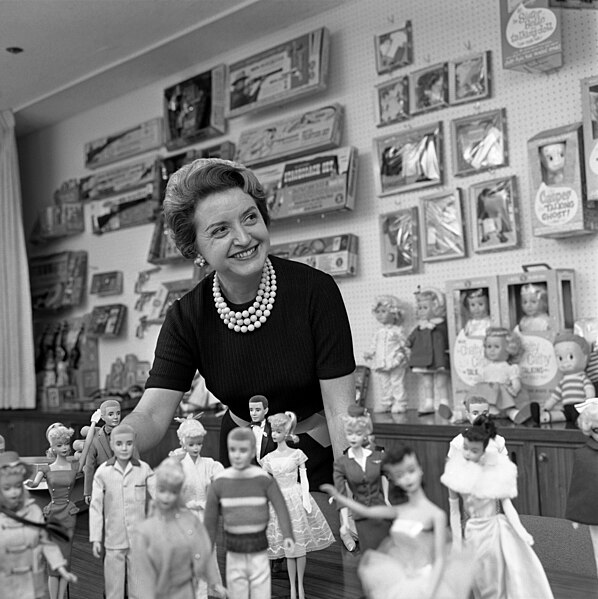


Since her debut in 1959, Barbie has become one of the most recognizable and beloved toys in the world. With her many careers, fashionable outfits, and global influence, Barbie has not only entertained generations of children but also sparked conversations about gender roles, beauty standards, and empowerment. Behind this cultural icon is a visionary woman named Ruth Handler, whose innovative thinking and entrepreneurial spirit revolutionized the toy industry. This blog post explores the story of Ruth Handler, her invention of Barbie, and how she changed the world of play forever.
Who Was Ruth Handler?
Ruth Handler was born on November 4, 1916, in Denver, Colorado, to Jewish immigrant parents from Poland. Growing up, she demonstrated an early interest in business and creativity, a passion that she would carry with her throughout her life. In 1938, she married Elliot Handler, a young artist, and entrepreneur. Together, they moved to Los Angeles, where they started a small business making furniture and other household goods.
In 1945, Ruth and Elliot Handler, along with their friend Harold “Matt” Matson, co-founded a toy company named Mattel. Initially, the company focused on making picture frames and later expanded into producing dollhouse furniture made from picture frame scraps. However, Ruth Handler saw the potential for something bigger—an idea that would soon change the course of toy history.
The Inspiration Behind Barbie
The inspiration for Barbie came from an observation Ruth Handler made while watching her daughter, Barbara, play with paper dolls. Ruth noticed that Barbara and her friends often preferred playing with adult-looking paper dolls rather than baby dolls, imagining them in various grown-up scenarios like going to work, attending parties, or getting married. At that time, most dolls on the market were designed to be babies, which limited the scope of imaginative play for young girls.
Ruth realized there was a gap in the toy market for a doll that allowed girls to envision themselves in different adult roles and imagined a three-dimensional version of these adult dolls. On a trip to Europe in 1956, Ruth came across the German Bild Lilli doll, an adult-figured doll based on a popular comic strip character. This discovery confirmed her belief that a similar doll could be successful in the American market.
Upon returning to the United States, Ruth Handler pitched the idea of an adult-bodied fashion doll to the all-male board of Mattel. Initially, the concept was met with skepticism. Critics argued that parents would not buy a doll with an adult figure for their children. Undeterred, Ruth persisted and eventually convinced Mattel to develop the doll.
The Birth of Barbie
In 1959, after extensive design and development, Mattel introduced the first Barbie doll at the American International Toy Fair in New York. Named after Ruth’s daughter, Barbara, Barbie was presented as a teenage fashion model with a sleek ponytail, wearing a black-and-white striped swimsuit, complete with accessories. She was the first mass-produced doll in the United States with adult-like features, standing 11.5 inches tall, with movable limbs and a sophisticated, stylish look.
Barbie’s launch was an instant success. The doll’s innovative design, coupled with Mattel’s aggressive marketing strategy—including television commercials aimed directly at children—helped Barbie become a cultural phenomenon almost overnight. By the end of the first year, over 350,000 Barbie dolls had been sold, and Barbie had begun her journey to becoming a household name.
Barbie’s Impact and Evolution
Barbie was revolutionary in many ways. She was more than just a doll; she was a reflection of possibility. Ruth Handler’s vision was that Barbie could be a canvas for a girl’s dreams, allowing her to explore different identities, careers, and lifestyles. Over the years, Barbie took on a multitude of roles—from astronaut and doctor to entrepreneur and presidential candidate—encouraging girls to imagine themselves in any role they desired.
However, Barbie has not been without controversy. Over the decades, she has faced criticism for promoting unrealistic beauty standards and reinforcing certain gender stereotypes. Despite these challenges, Barbie has continued to evolve. In recent years, Mattel has expanded Barbie’s world to include dolls of various body types, skin tones, and abilities, better reflecting the diversity of the world and embracing a more inclusive message.
Ruth Handler’s Legacy
Ruth Handler’s creation of Barbie was more than a business success; it was a groundbreaking moment in toy history that empowered children to dream bigger. As the first female president of a major toy company, Ruth also broke barriers in an industry dominated by men. She was a fierce advocate for women in business, challenging traditional gender roles both through her work at Mattel and her leadership.
Ruth Handler’s entrepreneurial journey continued beyond Barbie. In the 1970s, after being diagnosed with breast cancer and undergoing a mastectomy, she founded Nearly Me, a company specializing in prosthetic breast forms for women who had undergone similar surgeries. Through this endeavor, she once again demonstrated her commitment to empowering women, providing products that helped them feel whole and confident.
Handler passed away in 2002, but her legacy lives on through the millions of children who have played with Barbie, dreaming of all the possibilities that the future could hold.
A Doll, A Dream, and a Lasting Legacy:
Ruth Handler’s invention of Barbie transformed not only the toy industry but also the way children around the world play and imagine their futures. With her vision and determination, she created a doll that broke the mold, inviting children to see themselves in any role they chose. Barbie remains a cultural icon, inspiring countless stories, dreams, and debates—thanks to the innovative spirit of Ruth Handler.
Barbie continues to evolve, just as Ruth would have wanted, adapting to changing times while staying true to the core idea of encouraging imagination and possibility. Through her invention, Ruth Handler left an indelible mark on popular culture, proving that a simple toy can change the world.






.jpg)