


The modern Olympic Games have long been a symbol of athletic excellence, global unity, and competitive spirit. However, for much of their early history, they were a male-dominated arena, with women initially excluded from participating in many events. The story of women in the Olympics is one of persistence, determination, and gradual progress toward equality. This blog post explores when women were first allowed to compete in the Olympics, the challenges they faced, and how their inclusion has transformed the Games.
The Early Exclusion of Women from the Olympics
When the modern Olympic Games were revived in 1896 by Pierre de Coubertin, founder of the International Olympic Committee (IOC), they were envisioned as a competition exclusively for men. Coubertin believed that women’s participation was “impractical, uninteresting, unaesthetic, and improper.” As a result, no women were allowed to compete in the first modern Olympic Games held in Athens, Greece, in 1896.
However, women did not accept this exclusion quietly. Female athletes and their supporters began advocating for inclusion in the Olympic movement, arguing that women deserved the same opportunities to showcase their talents on the world stage.
Women Enter the Olympics: The 1900 Paris Games
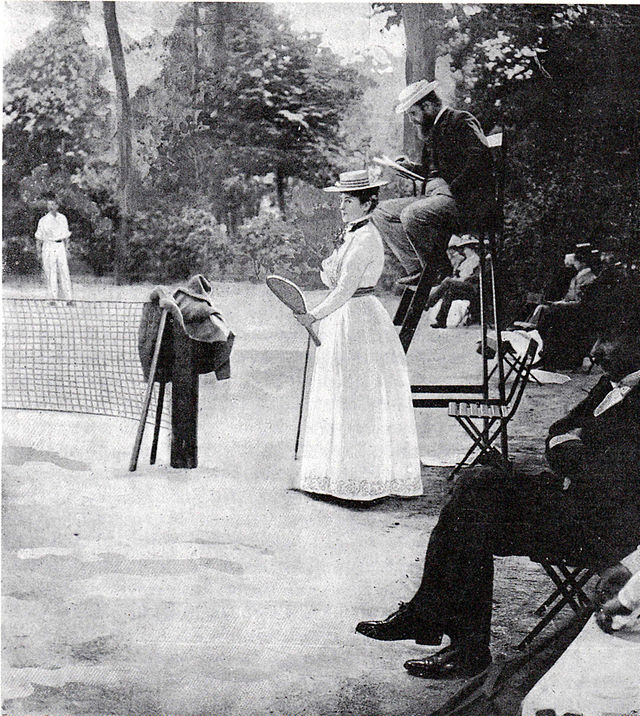
The first significant breakthrough came in 1900 when the Olympic Games were held in Paris, France. For the first time, women were officially allowed to compete in a select number of events. Out of 997 athletes, only 22 were women, representing just 2.2% of the total competitors. Women participated in five sports: tennis, sailing, croquet, equestrian, and golf.
The inclusion of these events was groundbreaking, marking a crucial first step in women’s participation in the Olympics. British tennis player Charlotte Cooper became the first female Olympic champion, winning the singles and mixed doubles titles. Her victory not only highlighted women’s athletic potential but also challenged the notion that sports were solely a male domain.
Despite this progress, women’s participation was still minimal and heavily restricted. Many sports remained closed to women, and it would take decades of advocacy and perseverance before women could compete in a broader range of events.
Gradual Expansion of Women’s Participation
Over the following decades, the number of sports and events open to women gradually expanded. In the 1928 Amsterdam Olympics, women’s athletics (track and field) and gymnastics were included for the first time. This was a significant step forward, but it did not come without controversy. During the 800-meter race, some female runners collapsed from exhaustion, leading to a decision to ban women from running distances longer than 200 meters until 1960.
As the years went by, more sports became available to women, and their participation steadily increased. By the 1972 Munich Olympics, women competed in events such as archery, volleyball, and basketball. However, it wasn’t until the 1984 Los Angeles Olympics that women were finally allowed to compete in the marathon—one of the most prestigious and physically demanding events in the Games.
Breaking Barriers: Women in the Modern Olympics
The 21st century has seen even more strides toward gender equality in the Olympics. By the 2012 London Games, women were allowed to compete in every sport featured in the Olympics for the first time in history. This milestone marked a turning point in the Olympic movement, demonstrating a commitment to inclusivity and equality.
In 2020, the Tokyo Olympics (held in 2021 due to the COVID-19 pandemic) made history by achieving near gender parity, with women making up 48.8% of the total athletes. New sports, such as boxing and wrestling, saw women competing alongside men, further narrowing the gender gap in Olympic sports.
The Impact of Women’s Participation in the Olympics
The inclusion of women in the Olympics has had a profound impact on sports and society as a whole. It has shattered stereotypes about women’s physical capabilities and inspired generations of female athletes to pursue their dreams. Female Olympians like Wilma Rudolph, Nadia Comăneci, Jackie Joyner-Kersee, and Simone Biles have become global icons, demonstrating that women can excel at the highest levels of athletic competition.
Moreover, women’s participation in the Olympics has helped raise awareness about issues of gender equality, discrimination, and representation in sports. It has sparked conversations about equal pay, access to training facilities, and media coverage, leading to broader discussions about equality in other areas of society.
Final Thoughts: A Continuing Journey Toward Equality
The journey of women in the Olympics has been a long and challenging one, marked by gradual progress and numerous milestones. From their first inclusion in 1900 to achieving near parity in 2020, women have fought tirelessly for their right to compete on the world stage. Their achievements have not only enriched the Olympic Games but have also helped to advance gender equality in sports and beyond.
As we look to the future, there is still work to be done to ensure that female athletes have the same opportunities, resources, and recognition as their male counterparts. However, the strides made over the past century are a testament to the power of perseverance, proving that with determination and support, women can achieve greatness in every field—even those once thought to be the exclusive domain of men.



